 Listicle
Best Natural Stone Sealers for Bathroom Showers
Table of Contents
- Top Natural Stone Sealers for Bathroom Showers
- How to Seal a Stone Shower: Substrate and Technique
- How Often to Reseal Natural Stone Shower Surfaces
- Frequently Asked Questions
Last Updated: October 19, 2026
Top Natural Stone Sealers for Bathroom Showers
The best natural stone sealers for bathroom showers depend on your stone's porosity, your climate, and how often you'll reseal.
Stone is porous, so water, soap residue, and minerals penetrate and cause staining and etching. A penetrating impregnator blocks moisture from inside the stone; an enhancing sealer adds color depth.
Quick Picks:
- Best Overall: Miracle Sealants 511 Impregnator, works on most stone types
- Best for Porous Stone: Miracle Sealants 511 Porous Plus, for high-porosity surfaces
- Best for Marble & Travertine: STONETECH BulletProof Sealer, handles acid-sensitive stone
- Best Low-Odor: Aqua-X Stone Sealer, water-based, minimal VOC impact
- Best Professional Grade: Dry-Treat Stain-Proof Original, trusted by installers
| Sealer | Type | Best For | Resealing Frequency |
|---|---|---|---|
| Miracle Sealants 511 Impregnator | Penetrating | Granite, slate, concrete | Every 1-3 years |
| Miracle Sealants 511 Porous Plus | Penetrating | Travertine, limestone, marble | Every 1-2 years |
| STONETECH BulletProof Sealer | Penetrating | Marble, travertine, acid-sensitive stone | Every 2-3 years |
| Aqua-X Stone Sealer | Water-based penetrating | Natural stone, unglazed tile | Every 1-2 years |
| Aqua Mix Sealer's Choice Gold | Penetrating | Tile and stone projects | Every 2-3 years |
| Dry-Treat Stain-Proof Original | Impregnating | All natural stone types | Every 2-3 years |
| Black Diamond Stoneworks Natural Stone Shower Sealer | Penetrating | Shower walls and floors | Every 2-3 years |
How to Seal a Stone Shower: Substrate and Technique
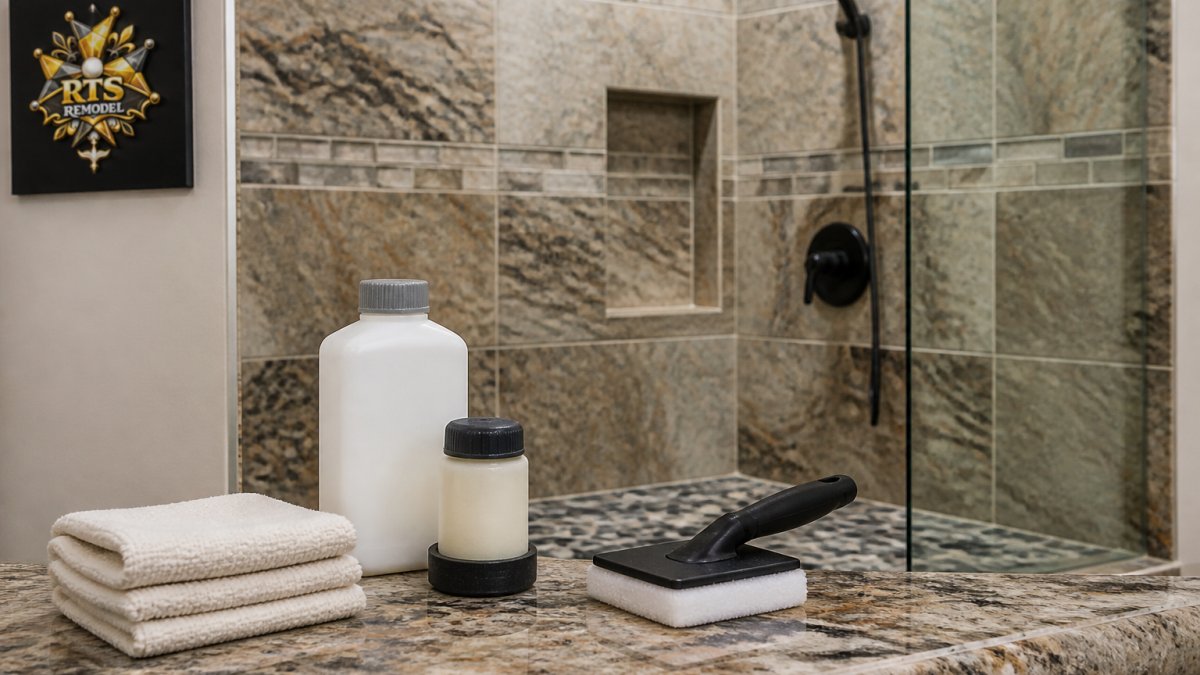
Sealing works only if the substrate is properly prepared. Start with a clean, dry surface free of soap scum, mineral deposits, or old sealer residue, skipping this is why many sealers fail.
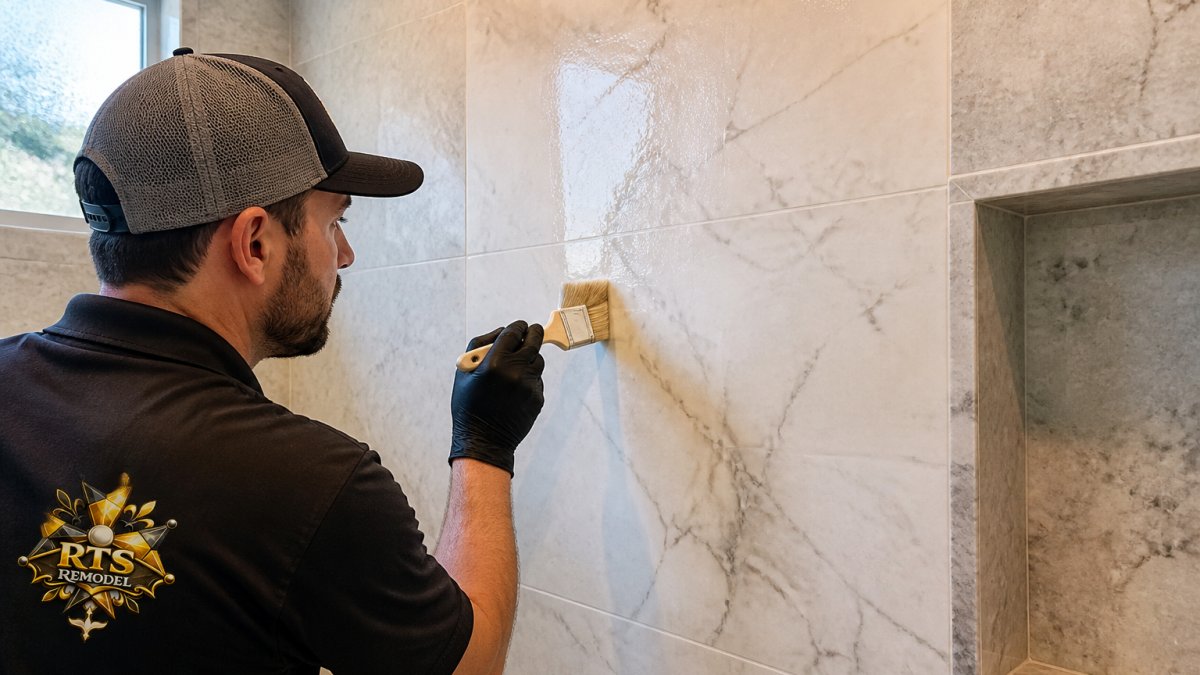
Surface preparation is non-negotiable. Use a pH-neutral cleaner; acidic cleaners etch travertine and marble. Rinse and let the stone dry completely, damp stone won't accept sealer.
Application matters as much as the product. Most penetrating sealers need a 10-15 minute dwell time. Apply thin, even coats and avoid puddles, excess sealer leaves cloudy residue.
On vertical shower walls, work bottom to top to prevent drips, and allow 24-48 hours of curing before exposing the stone to water. If you're planning a Custom Showers & Tile installation or a complete Bathroom Remodeling project in the Treasure Valley, proper substrate prep and sealing are built into our process from day one, it's not an afterthought.
How Often to Reseal Natural Stone Shower Surfaces
Natural stone in a shower needs resealing every 1-3 years, depending on stone type, sealer, and use. High-porosity travertine and limestone need it more often than dense granite, and water-based sealers need resealing sooner.
Watch for signs resealing is due: water no longer beads, stains appear more easily, or soap scum builds faster.
Between sealings, clean with a pH-neutral product and avoid acidic cleaners that etch marble and travertine. Squeegee after each use; in hard-water areas, buildup accelerates sealer breakdown.
Frequently Asked Questions
What's the difference between a penetrating sealer and a topical sealer for natural stone showers?
Penetrating impregnators absorb into the stone's pores, creating a hydrophobic barrier that repels water and stains while allowing the stone to breathe. Topical sealers sit on the surface, providing a visible protective layer. For shower applications, penetrating sealers are typically preferred because they don't create a slippery surface and maintain the stone's natural appearance and breathability, which is critical in wet environments where moisture vapor transmission prevents trapped water damage.
How often should you reseal a natural stone shower?
Most natural stone showers need resealing every 1-3 years, depending on the stone type, sealer formulation, and bathroom humidity. Marble and limestone are more porous and may need more frequent resealing than granite. Watch for water beading failure, when water no longer beads on the surface, as a sign your stone shower needs resealing. High-traffic showers in humid bathrooms may require more frequent applications.
What's the best sealer for a marble shower?
Marble requires a penetrating impregnating sealer formulated for calcareous stone, since marble is acid-sensitive and prone to etching. Look for sealers that offer both water and oil repellency (oleophobic protection) to guard against soap scum and mineral deposits. Ensure the product is specifically rated for shower use and vertical surfaces.
How long does stone sealer take to cure in a bathroom shower?
Most penetrating sealers cure to a walkable surface in 24-48 hours, but full cure, where the sealer reaches its maximum hydrophobic barrier strength, can take 3-7 days depending on the product and humidity. Water-based sealers typically cure faster than solvent-based options. During curing, avoid water exposure and allow adequate ventilation. If your bathroom has high humidity, curing may take longer. Always follow the manufacturer's dwell time and curing instructions for your specific sealer.
When your shower stone shows signs of wear or you're planning a custom shower installation, professional substrate preparation and sealing make the difference between a shower that lasts decades and one that deteriorates within years. RTS Remodel handles the complete process, from waterproofing and substrate prep to sealer selection and application, ensuring your stone is protected from day one. Contact us for an estimate on your bathroom remodel or custom shower project.