 How-to
How Do You Choose Tile for Bathroom Floors?
Last Updated: October 26, 2026
Quick Summary
When you choose tile bathroom floors, balance water resistance, durability, slip safety, and looks. Porcelain absorbs almost no moisture, ceramic absorbs slightly more, and natural stone like slate needs sealing. Substrate prep, waterproofing, and professional installation determine whether your floor lasts 10 years or 30.
- Porcelain tile resists moisture best; ceramic works well for standard bathrooms; natural stone requires sealing.
- Matte, honed, or textured finishes provide better grip than polished surfaces in wet areas.
- Large-format tile creates a modern look with fewer grout lines; small-format accommodates substrate irregularities.
- Proper substrate preparation and waterproofing are invisible but essential to floor longevity.
- Get multiple contractor estimates to evaluate your layout, existing conditions, and remodeling goals.
Table of Contents
- Key Factors When You Choose Tile for Bathroom Floors
- Slip-Resistant Bathroom Floor Tile Selection
- Best Tile for Bathroom Floors: Size, Layout, and Installation
- Frequently Asked Questions
Key Factors When You Choose Tile for Bathroom Floors
When you choose tile bathroom floors, balance water resistance, durability, slip safety, and looks. Porcelain absorbs almost no moisture, ceramic absorbs slightly more, and natural stone like slate needs sealing.
Tile Council of North America guidance on bathroom materials confirms material selection directly impacts how long your floor lasts. Weigh looks, performance, and upkeep, not appearance alone.
Different tile materials handle moisture and wear differently, so understanding their properties helps you pick the right one for your bathroom.
| Material | Water Absorption | Best For | Maintenance |
|---|---|---|---|
| Porcelain | Almost none | High-moisture bathrooms | Low upkeep |
| Ceramic | Slightly more than porcelain | Standard bathrooms | Moderate upkeep |
| Natural stone (slate) | Higher | Design-focused spaces | Requires sealing |
Slip-Resistant Bathroom Floor Tile Selection
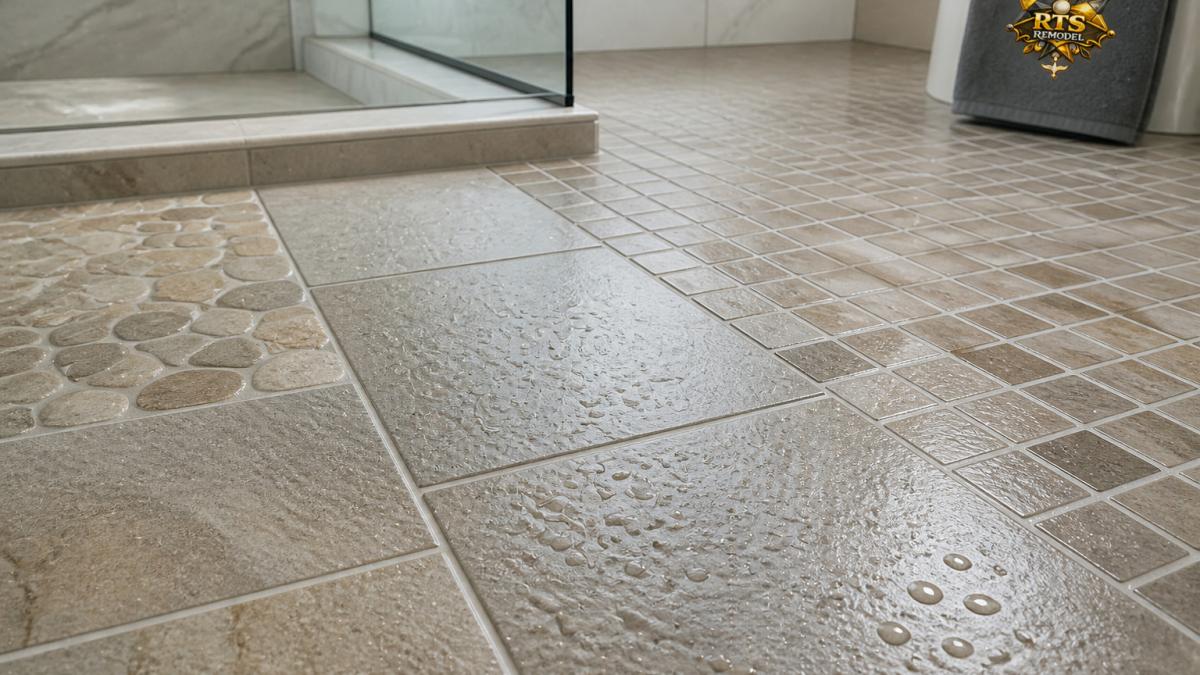
When you choose tile for bathroom floors, prioritize texture and finish over pure aesthetics. Matte or honed finishes, raised or sand-embedded textures, and slightly wider grout lines can provide more grip than polished surfaces; consider the finish carefully for wet areas.
The American Disabilities Act Accessibility Guidelines reference standard helps explain what "safe" means, though residential bathrooms aren't federally required to meet commercial standards. Wider grout lines can affect traction and require consideration during material selection.
Best Tile for Bathroom Floors: Size, Layout, and Installation
Large-format tile (12-by-24 inches and larger) creates a modern look and fewer grout lines. Small-format tile can accommodate some substrate irregularities.
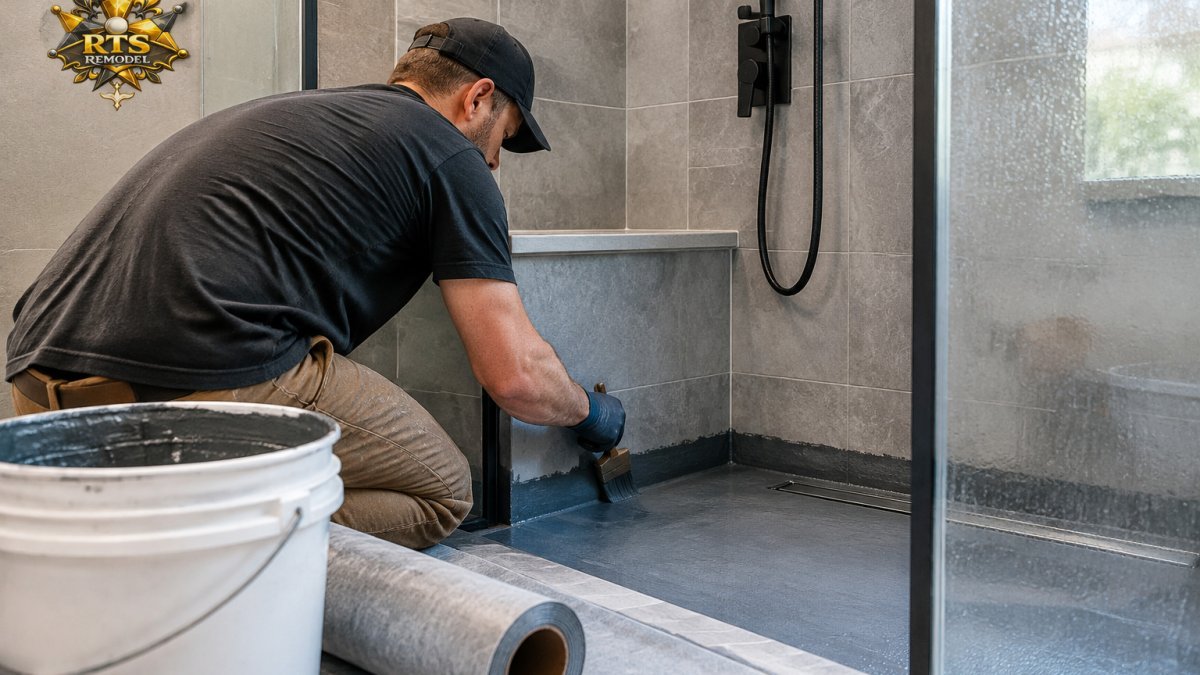
Tile Installation Substrate Prep Steps That Last covers the foundation work that determines whether your floor lasts 10 years or 30. Substrate prep, waterproofing, and proper slope for drainage are invisible but essential.
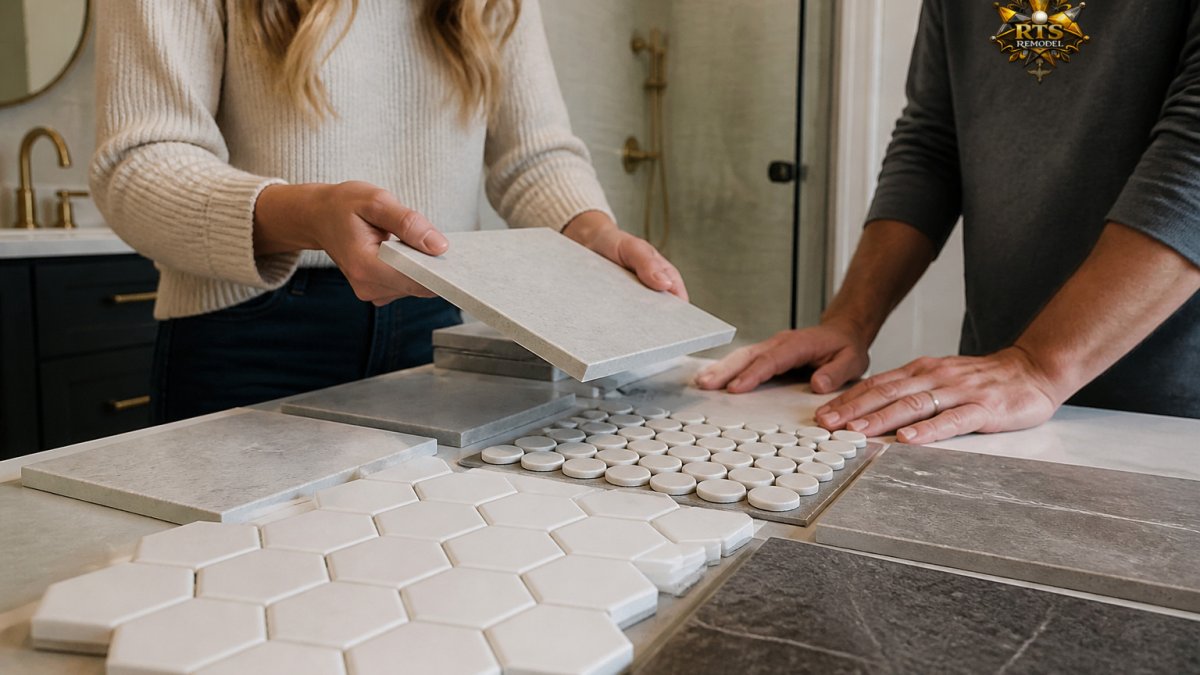
Hexagon and geometric layouts add interest; straight layouts in neutral tones offer a classic look. Porcelain vs Natural Stone for High-Traffic Bathrooms and 5 Best Bathroom Flooring for High Moisture Areas explore materials in depth.
Get multiple estimates from contractors who can evaluate your layout, existing conditions, and goals. Professional Tile & Stone Installation paired with a full Complete Bathroom Remodeling approach brings substrate, waterproofing, tile selection, and finish details together.
A floor that lasts comes down to preparation, material choice, and installation precision. Contact RTS Remodel for an estimate on your bathroom remodel.
Frequently Asked Questions
What type of tile is best for a bathroom floor?
Porcelain tile is a bathroom-floor option with low water absorption. Natural stone like slate requires sealing. Consider your bathroom's moisture level and traffic when choosing between ceramic, porcelain, or stone.
What bathroom floor tile is least slippery when wet?
Textured surfaces and matte finishes are options to consider when selecting bathroom floor tile. Look for a coefficient of friction rating suitable for wet areas. Consider the tile's surface and intended location, including shower floors and areas directly in front of the tub.
Is porcelain or ceramic tile better for a bathroom floor?
Porcelain and ceramic are both options for bathroom floors. Consider the bathroom's moisture level and traffic when choosing between them.