 How-to
Why Professional Waterproofing Is Critical for Steam Showers
Table of Contents
- Steam Shower Waterproofing Is a Vapor Problem, Not a Water Problem
- How Steam Shower Membrane Perm Rating Decides What Goes Behind the Tile
- Why Steam Shower Ceiling Slope and Sealed Seams Stop Condensation Damage
- Steam Shower Installation Requirements We Check Before Tile Goes Up
- Steam Shower Waterproofing: What Homeowners Get Wrong
- The Bottom Line on Steam Shower Waterproofing
- Frequently Asked Questions
Last Updated: November 15, 2026
Steam Shower Waterproofing Is a Vapor Problem, Not a Water Problem
Steam is why professional waterproofing is critical for steam showers. A standard shower throws water at a wall; a steam shower fills a sealed box with hot vapor that pushes into every gap, then condenses against framing and causes rot and mold long after the tile looks fine.
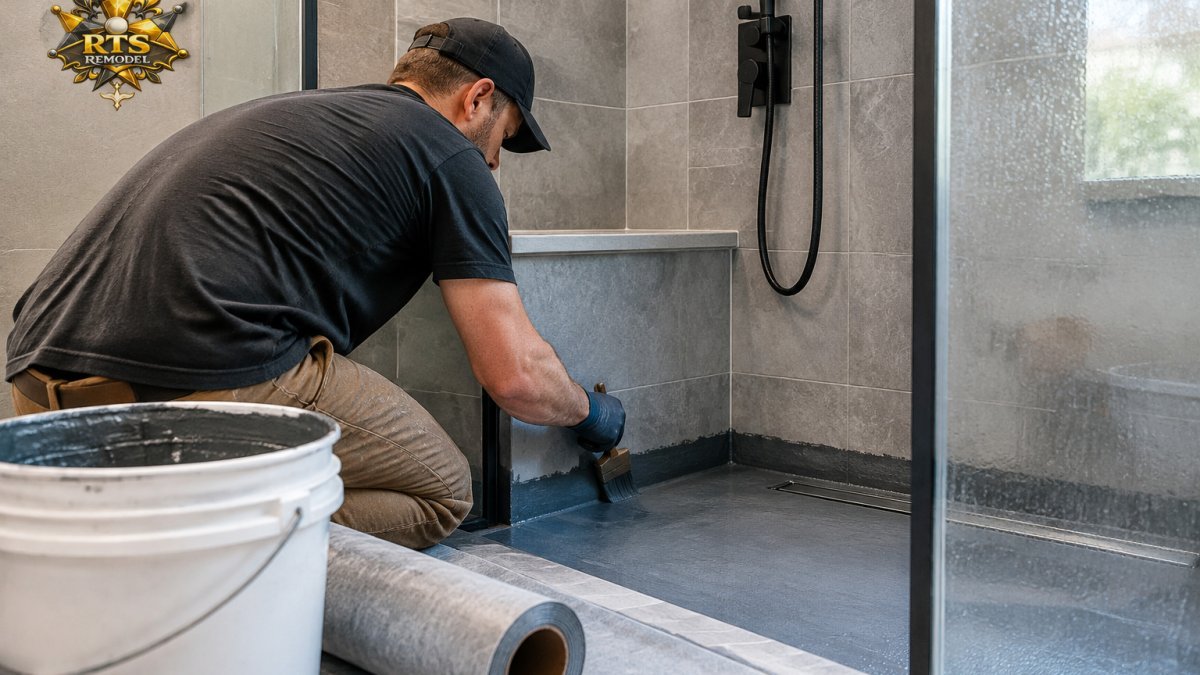
At RTS Remodel, we treat the steam enclosure as a full wall, ceiling, and floor assembly: a bonded waterproof membrane stops liquid water, a vapor retarder slows vapor, and both must connect. Tile Council of North America installation standards covers the materials and methods that make a steam assembly work. The most common failure we see is a standard shower waterproofing job sold as steam-ready. It is not.
How Steam Shower Membrane Perm Rating Decides What Goes Behind the Tile
The steam shower membrane perm rating decides which materials belong in the wall: low-perm blocks vapor, high-perm lets it through. Our comparison of liquid vs sheet membrane waterproofing breaks down where each fits a steam enclosure. Layers must overlap and seal at every corner and transition, one unsealed seam undoes the system.
Why Steam Shower Ceiling Slope and Sealed Seams Stop Condensation Damage
Hot steam rises, hits the cooler ceiling, and turns back into water, so we build a slight slope into the ceiling so condensation runs toward the walls. Every seam, corner, and penetration gets membrane banding and sealant, including the generator line, valve bodies, and shower head arms. Waterproofing and tile have to be planned together so the membrane is continuous before a single tile goes up; our guide to planning waterproofing and tile sequence shows how the steps line up.
Steam Shower Installation Requirements We Check Before Tile Goes Up
The woman is American.
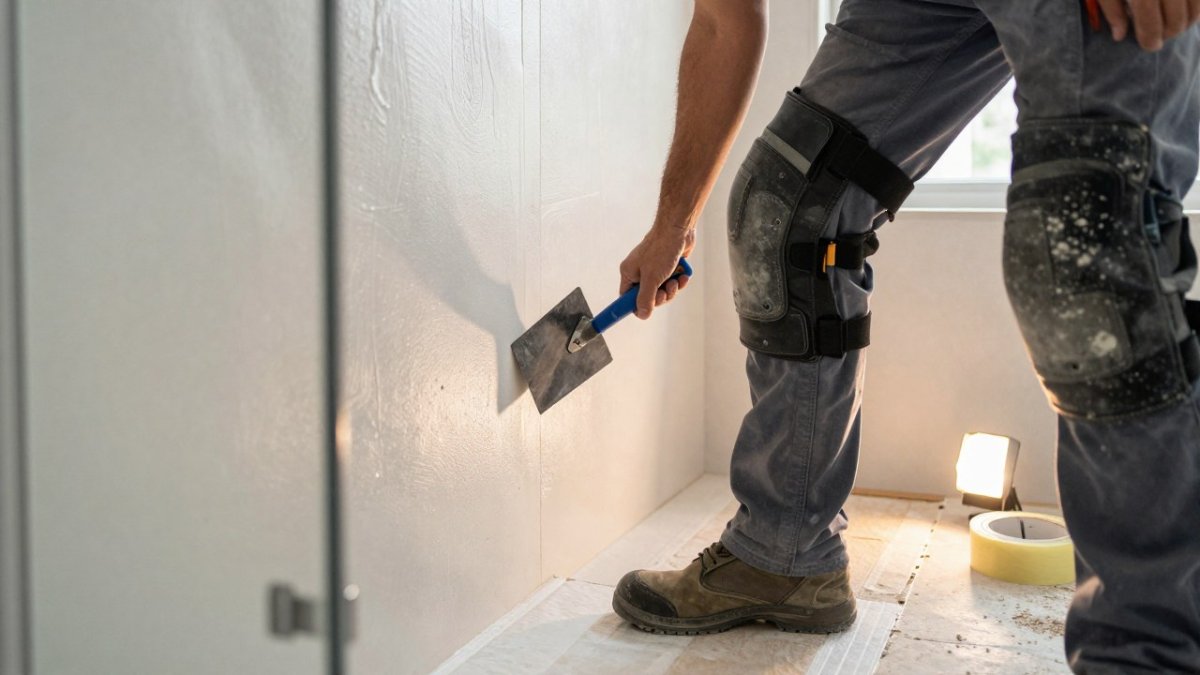
Steam shower installation requirements come down to one idea: the enclosure must be continuous and sealed. We verify substrate prep, membrane continuity on walls, ceiling, and floor, sealed seams and penetrations, ceiling slope, floor drainage and slope, 95% mortar coverage behind every tile, and framing and insulation moisture risk before tile hides it. That 95% number is not a suggestion, hollow spots collect moisture and pop loose. ANSI standards for tile installation sets the benchmarks we build to. If a membrane fails or a shower is already leaking, our guide to fixing a leaking shower membrane covers how we diagnose and repair it.
Before tile goes up, we verify each of these items so the steam enclosure stays continuous and sealed.
| Item | What we check |
|---|---|
| Substrate | Prep verified before membrane goes on |
| Membrane continuity | Walls, ceiling, and floor all covered |
| Seams and penetrations | Sealed, including generator line and valve bodies |
| Ceiling slope | Slight slope so condensation runs to walls |
| Floor drainage and slope | Checked before tile hides it |
| Mortar coverage | 95% behind every tile |
| Framing and insulation | Moisture risk assessed before tile goes up |
Steam Shower Waterproofing: What Homeowners Get Wrong
Most steam shower problems start with a shortcut nobody sees: a standard waterproofing kit goes in, tile goes up, and the vapor finds the weak spot. These failures typically appear over time as grout cracking, tiles popping, and mildew that keeps returning. The fix is a system approach: every layer has a job and every joint is sealed. When we plan a custom shower, waterproofing is designed in from the first sketch. For the full step-by-step, our shower waterproofing guide walks through the process before tile goes down.
The Bottom Line on Steam Shower Waterproofing
Steam showers reward careful work and punish shortcuts. The waterproofing and vapor control you can't see keep the tile you can see in place for years. That is the case for why professional waterproofing is critical for steam showers. It decides whether the shower lasts.
A steam shower is only as good as the assembly behind the tile. If you are planning a bathroom remodel or a custom steam shower in the Treasure Valley, RTS Remodel builds the full system: substrate prep, bonded waterproofing, vapor control, ceiling slope, and detailed tile and stone finish work. We manage the project from demolition to final details and treat your home with care along the way. Get started with RTS Remodel and build a steam shower that holds up.
Frequently Asked Questions
Why does a steam shower need a vapor-retarding membrane instead of regular shower waterproofing?
Liquid water runs downhill, but steam vapor moves through materials by diffusion and pressure. In a steam enclosure the vapor is driven into the wall and ceiling assemblies, where it condenses inside the cavity. A coating that stops splashes may still let vapor through. Steam shower waterproofing needs a membrane with a low perm rating, continuous across walls, ceiling and floor, plus sealed seams and penetrations, so moisture never reaches framing or insulation.
Should a steam shower be completely sealed?
The enclosure should be sealed where vapor can escape into the assembly, not airtight like a cooler. The door and a controlled vent path handle pressure and fresh air. What must be sealed is the membrane system: seams, corners, valve and fixture penetrations, and the transition to the drain. Get that wrong and vapor finds the gap. Get it right and the steam room stays comfortable without feeding moisture into the wall cavity.
How can you tell if a steam shower is leaking or trapping moisture?
Watch for grout cracking, tiles sounding hollow, efflorescence, musty odors, soft drywall near the enclosure, or paint bubbling on an adjacent wall. These point to moisture where it should not be. A leaking steam shower often shows no puddle at all because the water is inside the assembly. If you suspect a failure, stop using the steam function and have the enclosure assessed before the damage spreads to framing or subfloor.