 How-to
How to Keep Dust Out During Renovation
Last Updated: November 8, 2026
Quick Summary
To keep dust out during renovation, build a sealed plastic barrier at the doorway: wipe the frame, tape plastic to the trim, overlap sheets by a foot, and add a zippered entry panel. Seal HVAC vents and air returns inside the work zone, then run a HEPA air scrubber to create negative pressure.
- Dust travels farther than most homeowners expect, so containment matters on a remodel.
- Overlap plastic sheets by a foot and tape every seam to close gaps.
- Seal HVAC vents and air returns inside the work zone so dust is not pulled through the house.
- Negative pressure pulls air in from the house instead of pushing dust out.
- In an apartment, set the barrier at the entry to the work zone and seal the gap under the door.
Table of Contents
- Set Up a DIY Dust Barrier That Actually Seals
- Use a Construction Air Cleaner and Negative Pressure
- How to Keep Dust Out During Renovation in an Apartment
- Frequently Asked Questions
Set Up a DIY Dust Barrier That Actually Seals
A DIY dust barrier is a temporary plastic wall that seals a work area off from the rest of your home. Dust travels farther than most homeowners expect, so containment matters on a remodel.
Most DIY barriers fail at the edges. Tape a sheet across a doorway and dust still slips through the gaps.
- Wipe the door frame clean so tape sticks.
- Run painter's tape along the trim, then press plastic onto it.
- Overlap sheets by a foot and tape every seam.
- Cut a zippered doorway panel for entry.
- Tape plastic over the floor before laying protection boards.
Seal HVAC vents and air returns inside the work zone; dust pulled into a return spreads through the whole house (the EPA).
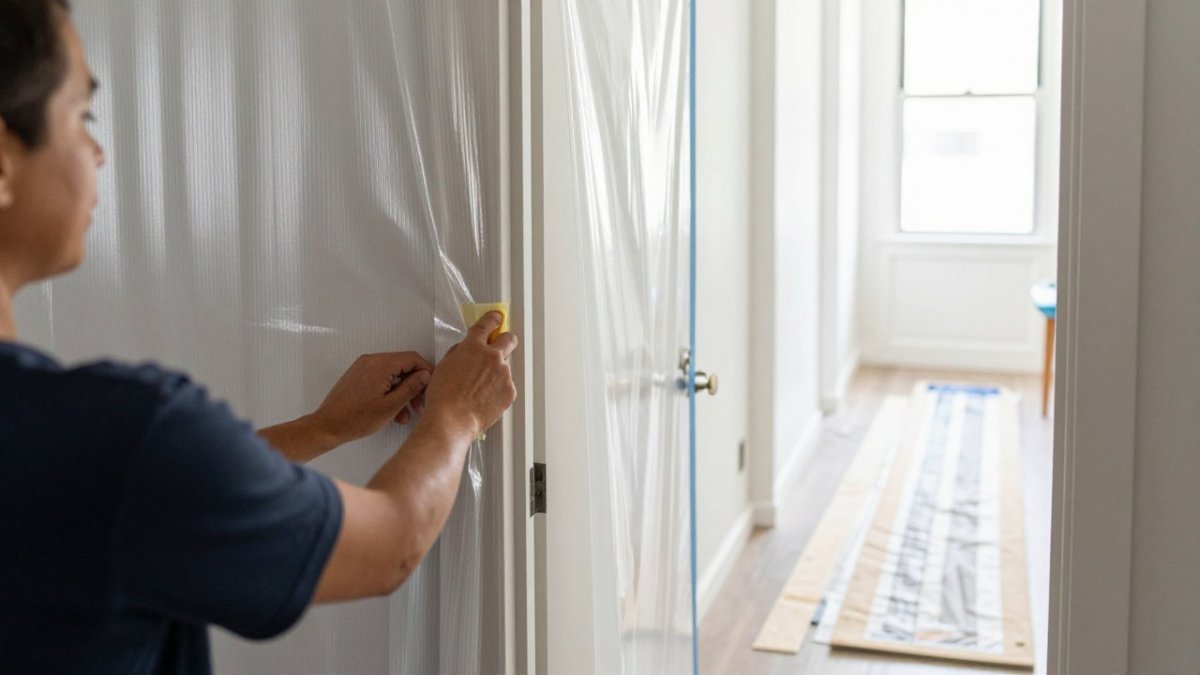
Here is the barrier sequence that keeps dust where it belongs.
| Step | What to do |
|---|---|
| 1 | Wipe the door frame clean so tape sticks |
| 2 | Run painter's tape along trim, press plastic onto it |
| 3 | Overlap sheets by a foot and tape every seam |
| 4 | Cut a zippered doorway panel for entry |
| 5 | Tape plastic over floor before laying protection boards |
| Extra | Seal HVAC vents and air returns inside the work zone |
Use a Construction Air Cleaner and Negative Pressure
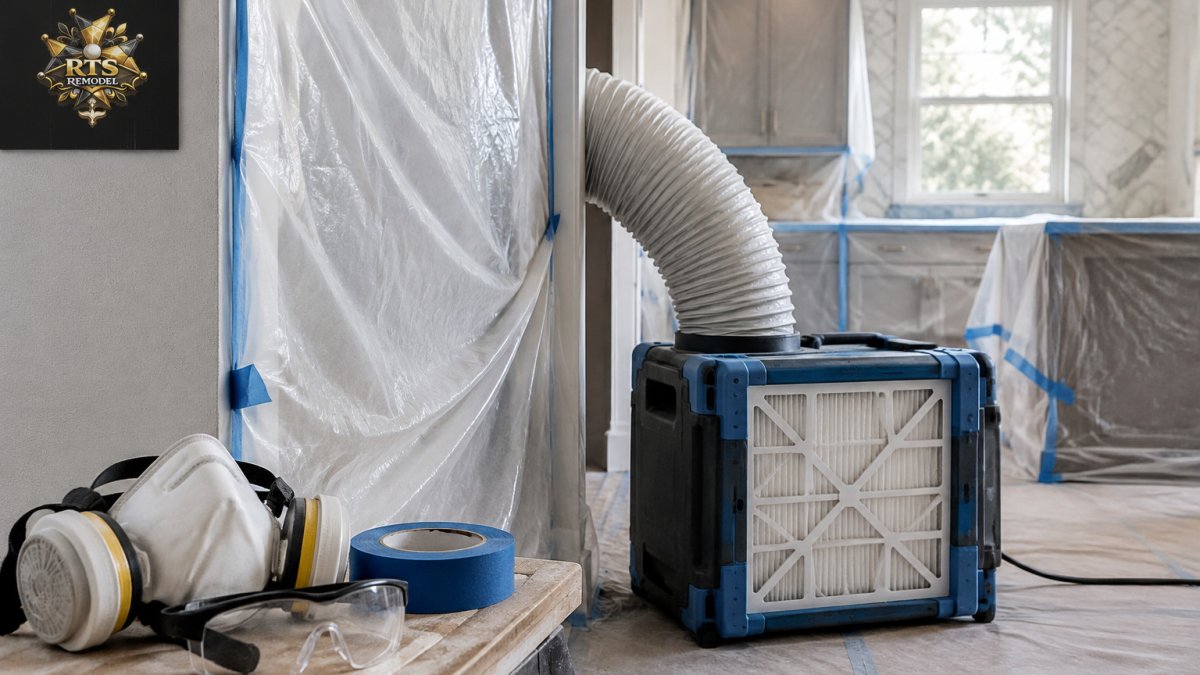
Negative pressure means the work room pulls air in from the house instead of pushing dust out, created by exhausting air with a fan or air scrubber.
A construction air cleaner with a HEPA filter can capture fine drywall dust that a shop vacuum misses. Place it to draw air across the work area, not from the clean side.
Watch out: exhausting air into a wall cavity or attic pushes dust into hidden spaces. Vent through a window instead.
- Run the scrubber continuously during sanding and demolition.
- Check the filter daily and replace it when airflow drops.
- Keep the barrier zipped during cutting and sanding.
For full bathroom and shower builds, containment is part of managing the project. See our bathroom remodeling and custom showers services.
How to Keep Dust Out During Renovation in an Apartment
Learning how to keep dust out during renovation in an apartment comes down to tight spaces and shared walls, less room for containment and neighbors on the other side.
Set the barrier at the apartment entry to the work zone, not the building door. Seal the gap under the door with a foam backer or rolled towel.
- Move furniture out or cover it with plastic.
- Lay protection boards over carpet and hardwood.
- Close and tape closet doors inside the work area.
Run a HEPA air cleaner in the main living space. Vacuum and damp wipe daily, and bag debris before carrying it out.
A written plan keeps the mess contained and the schedule on track. Our bathroom remodel project management checklist walks through sequencing, and our list of bathroom remodel mistakes to avoid covers common pitfalls.
Dust control is the part of a remodel homeowners notice first. If you would rather hand that work to a crew that plans containment from day one, RTS Remodel handles complete kitchen and bathroom transformations across the Treasure Valley, with careful protection of your home, coordinated scheduling, and detail-driven finish work. Get started with RTS Remodel and keep your home clean while it transforms.
Frequently Asked Questions
Should you seal air vents during a renovation?
Yes. Cover HVAC supply vents and returns in the work zone with plastic sheeting and painter's tape before demolition starts. Dust pulled into the ductwork can spread through the whole house for weeks. Turn the system off while sanding or cutting, and change the furnace filter once the messy phase ends. In an apartment or condo, sealing vents matters even more because shared ductwork can carry dust to neighboring units.
Can a construction air cleaner help control renovation dust?
A construction air cleaner with a HEPA filter captures fine drywall dust that settles slowly and floats into living spaces. Place it inside the work zone near the dustiest task, and run it continuously during sanding and demolition. Match the unit's airflow to the room size, and check or replace the filter regularly. Pair it with source control, like dust-extracting tools and a shop vacuum, for the best results.
How do you clean up dust after a renovation?
Work top to bottom: vacuum ceilings, walls, and surfaces with a HEPA or dust-rated vacuum, then damp wipe with a microfiber cloth. Avoid dry sweeping, which just pushes dust back into the air. Run the air cleaner for a day or two after the work ends, change HVAC filters, and wash curtains and upholstery covers. Repeat vacuuming over several days, since fine dust resettles after the first pass.