 listicle
Luxury Walk-In Shower Design Trends 2026
Table of Contents
- What Makes a Walk-In Shower Feel Luxurious in 2026
- Walk-In Shower Ideas: Frameless Glass and Open Layouts
- Large-Format Shower Tile and Natural Stone Surfaces
- Frequently Asked Questions
Last Updated: October 5, 2026
What Makes a Walk-In Shower Feel Luxurious in 2026
A luxury walk-in shower design combines open sightlines, premium materials, and thoughtful details. The real difference isn't the fixtures, it's how substrate preparation, waterproofing, and grout lines work together.
At RTS Remodel, luxury isn't about spending the most. It's intentional choices: frameless glass showcasing beautiful tile, natural stone underfoot, and layouts that flow without awkward transitions.
The luxury walk-in shower design trends we're seeing in 2026 center on accessibility, texture, and the illusion of space: zero-barrier entries, large-format tile, matte black or brass fixtures, and careful drainage slope and waterproofing.
Walk-In Shower Ideas: Frameless Glass and Open Layouts
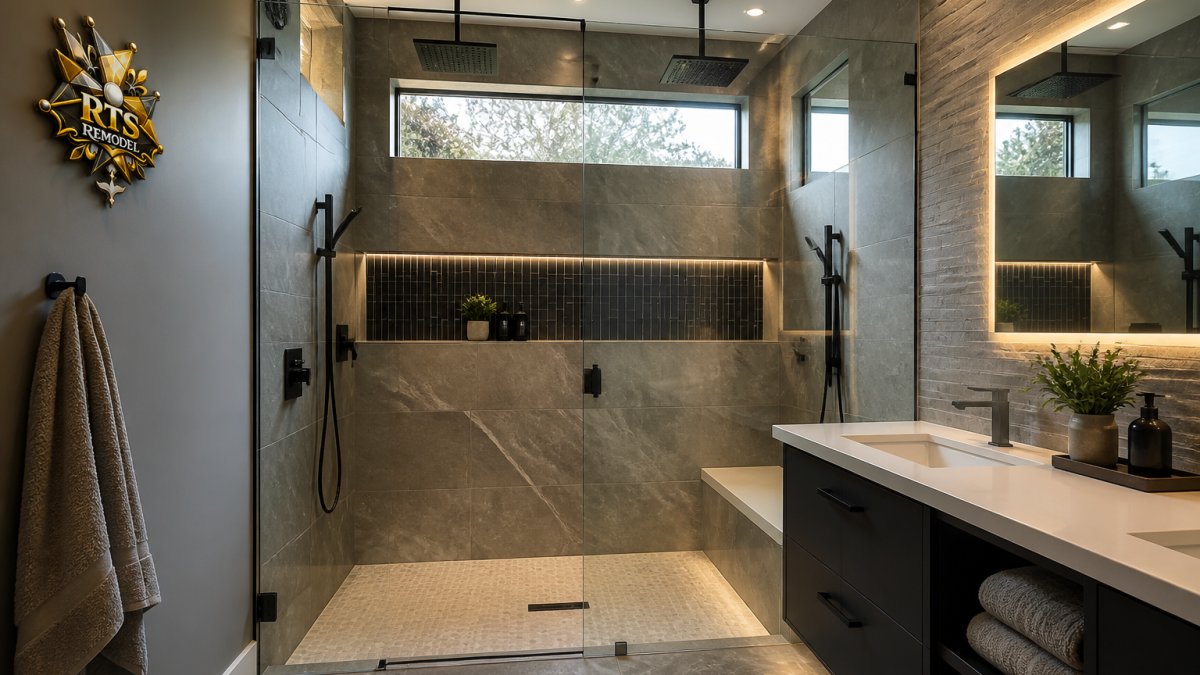
Frameless glass enclosures define the contemporary luxury walk-in shower. Without metal tracks interrupting sightlines, the glass nearly disappears, making even small bathrooms feel spacious.
The most popular configuration is a fixed glass panel on one or two sides with an open entry on the third, eliminating swing-out doors and reducing maintenance. The open side becomes a threshold: a gentle slope to a linear drain or a flush, curbless entry.
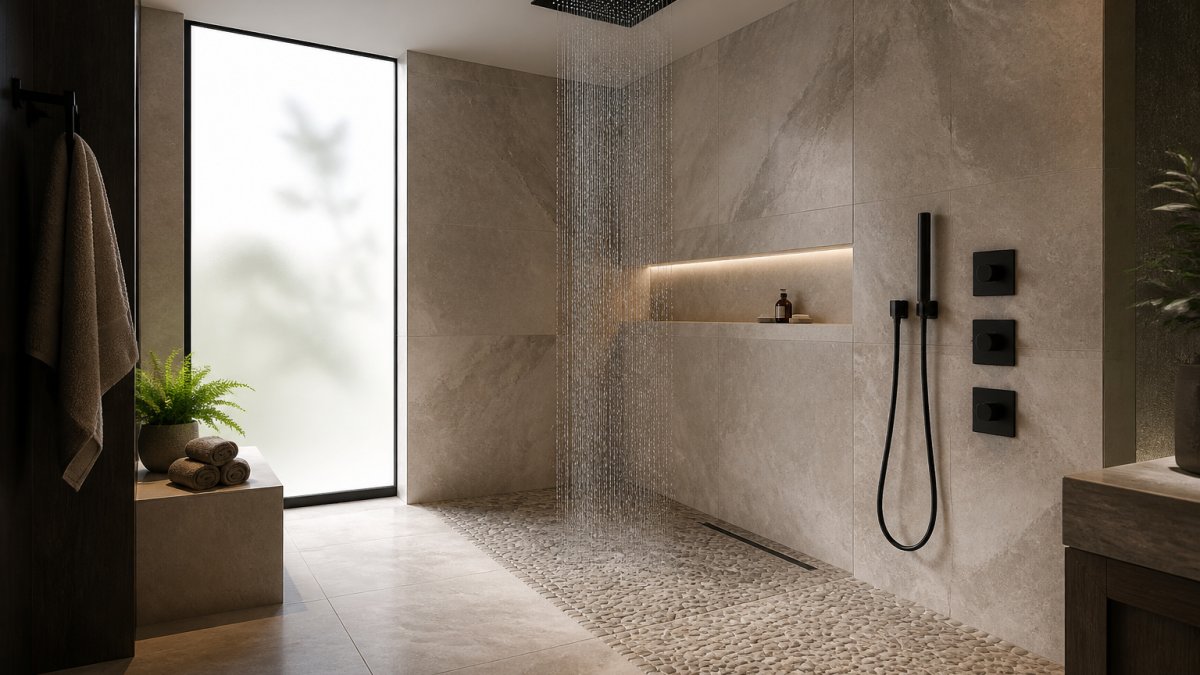
Curbless shower design appeals to homeowners of all ages and mobility levels. Installation requires precise slope work (typically 1/8 inch per foot toward the drain) and a waterproofing system that channels water without pooling.
In tight bathrooms, corner placement with angled glass works best, two fixed panels maximize floor space. Open, doorless layouts suit master bathrooms where space allows.
Large-Format Shower Tile and Natural Stone Surfaces
Large-format shower tile has become the standard for luxury installations. Tiles 24 by 48 inches or larger mean fewer grout joints, less water pooling, and uninterrupted visual flow that showcases natural stone veining.
Natural stone, marble, granite, limestone, slate, brings authentic luxury, but each requires proper sealing and maintenance. Marble is softer and more porous than granite, needing more frequent sealing and no acidic cleaners. Slate offers excellent slip resistance for floors.
Stone-look porcelain offers a practical alternative, replicating natural stone's color variation and texture with superior durability. It's non-porous, stain-resistant, and needs no sealing.
Textural contrast means layering finishes: polished walls with honed or textured floors for interest and slip resistance. Mosaics or accent tiles work well around a niche, on a feature wall, or along the perimeter.
The real luxury in a walk-in shower design comes from execution. Substrate preparation, flat, reinforced, fully waterproofed, determines whether your shower lasts five years or twenty-five. Lippage must stay under 1/16 inch, and grout lines should be consistent in width and color, properly sealed against water infiltration.
Ready to transform your bathroom with a luxury walk-in shower that combines beautiful design with lasting durability? RTS Remodel specializes in complete bathroom remodeling and custom shower installations throughout the Treasure Valley. We handle everything from substrate preparation and waterproofing to final grout work and hardware installation, ensuring every detail, visible and hidden, meets the standards of true craftsmanship. Learn more about bathroom design best practices from the National Kitchen and Bath Association. Contact us for an estimate on your shower project and see how thoughtful design and precision installation create a space you'll love for decades.
Frequently Asked Questions
What makes a luxury walk-in shower design feel expensive and high-end?
Luxury walk-in showers combine several elements: frameless glass enclosures that create visual openness, large-format tiles with minimal grout lines, rainfall showerheads, natural stone or stone-look surfaces, and thoughtful lighting. The real difference is in the details, proper waterproofing, correct drainage slope, quality fixtures in matte black or brass finishes, and careful attention to transitions and trim. These elements work together to create a cohesive, spa-inspired environment that feels intentional and well-crafted rather than generic.
Are curbless shower designs practical, or do they cause water damage?
Curbless showers work well when designed and installed correctly. The key is proper substrate preparation, slope (typically 1/4 inch per foot toward the drain), and a quality waterproofing system beneath the tile. Water should flow toward the drain naturally, not pool at the edges. Many homeowners worry about water escaping the shower area, but that's a sign of poor slope or inadequate waterproofing, not a flaw in the curbless concept itself. Professional installation ensures the hidden work is done right so you don't discover problems a year later.
What's the difference between large-format tile and standard shower tile?
Large-format tiles (typically 12x24 inches or larger) create fewer grout lines, which gives a cleaner, more modern appearance and is easier to maintain. Standard tiles are smaller and require more grout, which can trap moisture and requires more frequent cleaning. Large-format tiles also showcase stone patterns and textures better. The trade-off is that large-format tiles require more precise substrate preparation and skilled installation to avoid lippage (uneven edges) and ensure proper drainage. The visual payoff is worth the extra care.