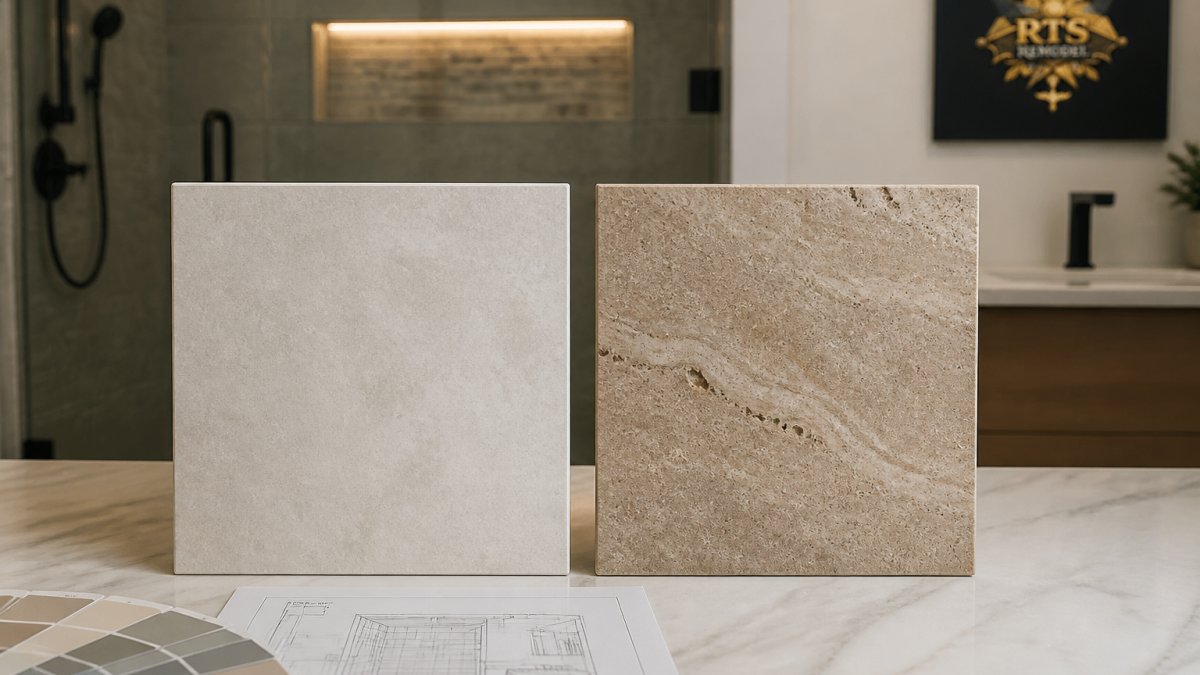
 comparison
Porcelain vs Natural Stone for High-Traffic Bathrooms
Table of Contents
- Porcelain vs Natural Stone: Quick Comparison
- Best Tile for Bathroom Floor: Performance Metrics
- Natural Stone Maintenance Requirements
- Making Your Choice
- Frequently Asked Questions
Last Updated: October 2, 2026
Porcelain vs Natural Stone: Quick Comparison
When you're planning a high-traffic bathroom remodel, the floor material choice shapes everything that comes after. Porcelain and natural stone both deliver durability and beauty, but they handle moisture, maintenance, and wear very differently. Understanding those differences helps you make a choice that fits your lifestyle and your home's actual needs.
Porcelain is engineered ceramic fired at extreme temperatures, creating a dense, non-porous surface. Natural stone, marble, granite, limestone, is quarried and finished, retaining its inherent porosity and unique character. The core tension: porcelain prioritizes performance and consistency; natural stone prioritizes authentic beauty and accepts higher maintenance as the trade-off.
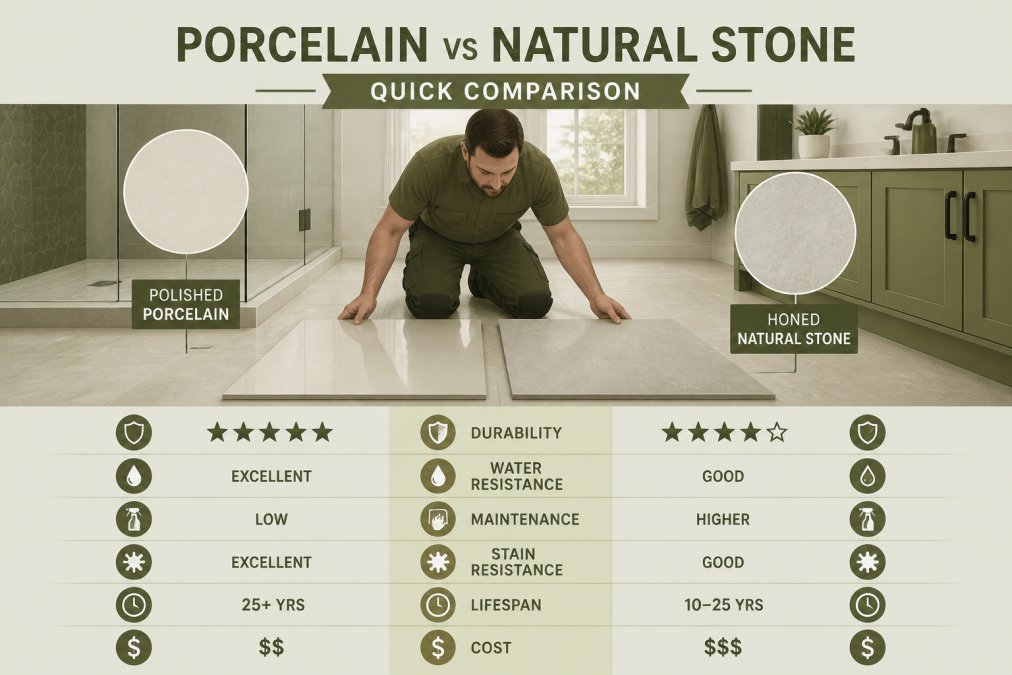
| Material | Water Absorption | Maintenance | Scratch Resistance | Best For |
|---|---|---|---|---|
| Porcelain | <0.5% (non-porous) | Minimal sealing needed | High (PEI 4-5) | Busy families, wet areas |
| Natural Stone | 0.5-3% (porous) | Regular sealing required | Moderate (varies by type) | Design-focused, lower-traffic |
Porcelain performs best in high-moisture environments because it doesn't absorb water. It resists scratches, staining, and chemical damage from bathroom cleaners. Large-format porcelain tiles with rectified edges (factory-cut for tight, consistent grout lines) reduce lippage and create seamless floors that are easier to clean.
Natural stone brings warmth and visual depth that porcelain can't replicate. Each slab has distinct veining, color variation, and character. But that beauty comes with responsibility: marble and limestone are softer, etch from acidic products, and require professional sealing every 1-2 years. Granite is harder and more forgiving, yet still demands proper maintenance to preserve its finish.
Best Tile for Bathroom Floor: Performance Metrics
For high-traffic bathrooms, porcelain outperforms natural stone on nearly every durability metric. Its low water absorption rate (typically under 0.5%) means it won't swell, warp, or develop mold in wet conditions. The PEI (Porcelain Enamel Institute) rating system measures hardness: porcelain tiles for bathroom floors should rate PEI 4 or 5, indicating they'll handle daily foot traffic, cleaning equipment, and moisture without deterioration.
Natural stone's water absorption varies. Granite absorbs less than 0.5% and holds up reasonably well in bathrooms when properly sealed. Marble and limestone absorb more (0.5-3%), making them riskier in wet zones unless protected with multiple sealing layers and careful use. Acidic cleaners, vinegar-based products, and even some soaps will etch marble's polished surface, leaving dull marks that require professional restoration.
Thermal conductivity matters for radiant floor heating systems. Porcelain conducts heat efficiently, making it ideal if you're planning heated floors. Natural stone varies: granite conducts heat well, while marble conducts less effectively. If radiant heating is part of your remodel, porcelain is the safer choice.
Slip resistance (measured by DCOF, Dynamic Coefficient of Friction) is critical in bathrooms. Polished porcelain can be slippery when wet; honed or textured finishes provide better grip. Natural stone's texture offers inherent slip resistance, but a wet polished marble floor is genuinely hazardous. For safety, specify honed or textured finishes regardless of material.
Natural Stone Maintenance Requirements
Natural stone demands ongoing attention. Sealing is non-negotiable for marble, limestone, and travertine in bathrooms. Sealer fills the stone's pores, slowing water and stain absorption, but it's not permanent. Most natural stone needs resealing every 12-24 months, sometimes more frequently in high-moisture areas.
Cleaning requires care. Acidic cleaners (vinegar, lemon juice, commercial bathroom sprays with citric acid) etch marble and limestone instantly. Use pH-neutral cleaners designed for natural stone. Granite tolerates stronger cleaners but still benefits from stone-specific products that won't degrade the sealer.
Grout maintenance is often overlooked. Grout lines in natural stone floors absorb water and staining agents. Grout sealer protects the joints and should be reapplied periodically. In high-traffic bathrooms, grout can crack or crumble over time, requiring professional regrouting.
Staining is a real concern with lighter stones. Hard water deposits, soap residue, and mineral stains accumulate on porous surfaces. A professional poultice treatment can remove some stains, but prevention through regular sealing is far more cost-effective.
Porcelain, by contrast, requires minimal maintenance. A simple pH-neutral cleaner and water keep it clean. No sealing needed. Grout still requires attention, but the tile itself is virtually stain-proof and won't etch or absorb moisture.
Making Your Choice
Choose porcelain if your bathroom sees heavy daily use, you have young children or pets, or you prefer low-maintenance surfaces that will perform reliably for decades. Porcelain's consistency and durability make it the practical choice for most families in the Treasure Valley.
Choose natural stone if you're drawn to its authentic beauty and you're willing to commit to regular sealing, careful cleaning practices, and occasional professional restoration.
Frequently Asked Questions
Is porcelain tile or natural stone more durable for high-traffic bathroom floors?
Porcelain tile generally outperforms natural stone in high-traffic bathrooms. Porcelain has a PEI rating of 4-5, meaning superior scratch and wear resistance with minimal maintenance. Natural stone varies by type; marble and limestone are softer and more prone to etching and staining, while granite and slate offer better durability but still require regular sealing. For bathrooms with heavy foot traffic, porcelain's consistent hardness and low water absorption make it the more practical choice.
What are the primary natural stone maintenance requirements in wet bathroom environments?
Natural stone requires professional sealing every 1-3 years, depending on porosity and bathroom humidity. Marble and limestone are especially vulnerable to etching from acidic cleaners and soap residue. Granite and slate are more resilient but still benefit from regular sealing to prevent water absorption and staining. Daily cleaning should use pH-neutral products; avoid vinegar, lemon, or acidic bathroom cleaners that can damage the surface. Proper grout maintenance and drainage slope are also critical to prevent water from pooling and penetrating the stone.
How does bathroom floor waterproofing differ between porcelain and natural stone installations?
Both materials require identical waterproofing standards at the substrate level. The critical difference is water absorption: porcelain's vitrified composition resists moisture penetration, while natural stone's porosity demands more rigorous sealing and slope management. Proper substrate preparation, including cement backer board, waterproofing membrane, and correct drainage slope, is essential for both. With natural stone, grout selection matters more; epoxy or urethane grout resists water better than standard cement grout. Professional installation ensures all hidden work meets code and prevents future damage.