 Comparison
What's the Best Thinset Mortar for Large-Format Tile?
Last Updated: October 25, 2026
Quick Summary
The best thinset mortar for large format tile is polymer-modified medium-bed mortar. The polymer boosts bond strength and flexibility to prevent hollow spots, cracking, and lippage, while the medium bed provides the thickness large tiles need for complete substrate coverage.
- Polymer-modified thinset resists moisture and moves with substrate expansion, reducing callbacks and failures.
- Medium-bed mortar fills gaps more completely than standard thinset, critical for tiles 12x24 inches and larger.
- Unmodified thinset works for cement board and natural stone, but modified is required for porcelain large-format applications.
- Substrate preparation works hand-in-hand with mortar selection to ensure lasting tile performance.
Table of Contents
- Why Thinset Mortar Choice Matters for Large-Format Tile
- Thinset for 12×24 Porcelain Tile: Medium-Bed vs. Standard Options
- Modified vs. Unmodified Thinset: Which Works Best
- Frequently Asked Questions
Why Thinset Mortar Choice Matters for Large-Format Tile
Large-format tile, typically 12×24 inches and larger, carries more weight and surface area, so the bond has to be rock solid.
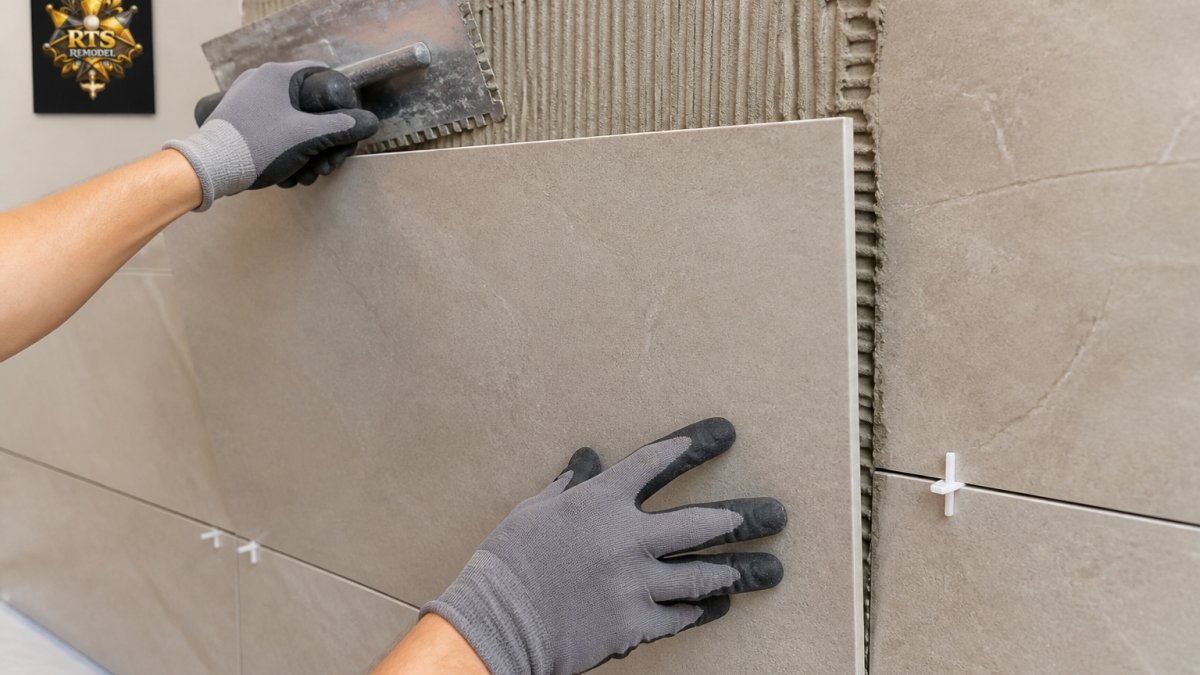
The wrong thinset mortar for large-format tile causes hollow spots, lippage, cracking, and tiles pulling away later. The right mortar delivers coverage, adhesion, and flexibility to handle substrate movement.
Here's how to choose the best thinset mortar for large-format tile, and why substrate prep works hand-in-hand with mortar selection.
Thinset for 12×24 Porcelain Tile: Medium-Bed vs. Standard Options
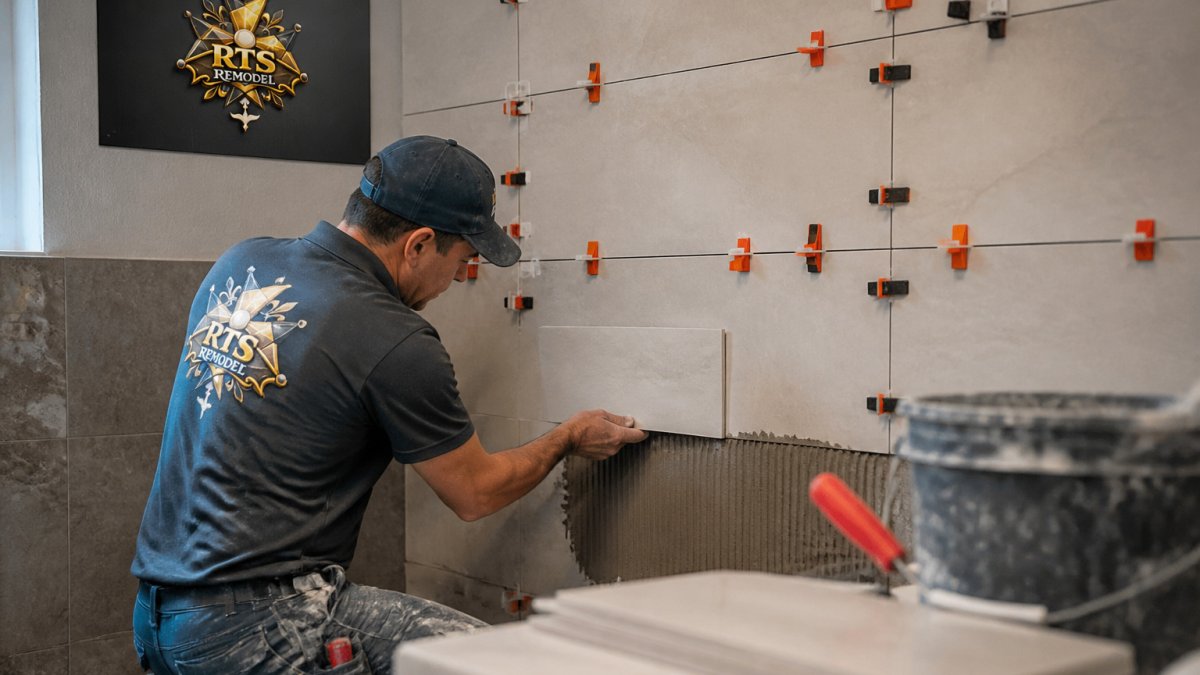
Standard thinset works for small wall tiles up to about 8×10 inches. A 12×24 porcelain tile needs more support, which is where medium-bed mortar comes in.
Medium-bed mortars are thicker and stronger, filling gaps between tile and substrate more completely, critical for large tiles where small voids cause failure, without the tile sagging or sliding.
Porcelain is non-porous and doesn't absorb water like ceramic, so it needs excellent adhesion. Polymer-modified mortars bond to the slick surface and resist moisture at the tile-mortar interface.
For 12×24 porcelain, a polymer-modified medium-bed mortar is often recommended: the thickness you need plus the bond strength to lock the tile in place.
ANSI specifications for tile installation
Modified vs. Unmodified Thinset: Which Works Best
This comes down to substrate and tile type. Unmodified thinset is Portland cement, sand, and water; modified thinset adds a polymer for adhesion and flexibility.
Unmodified thinset works well over cement board and concrete, and it's the correct choice for natural stone, since some stones are damaged by modified additives.
Modified thinset is your best bet for porcelain, especially large-format. The polymer boosts bond strength and flexibility so the mortar moves with substrate expansion and contraction, reducing cracking and lippage. It also resists moisture better, ideal for showers and wet areas.
For large-format tile applications, the best thinset mortar for large format tile is polymer-modified, and we almost always specify it. The extra adhesion and flexibility prevent expensive callbacks later.
Tile Council of North America installation guidelines
See how substrate prep affects mortar choice with prepare uneven subfloors for large-format tile, how to avoid lippage with preventing lippage in large tile, and the prep steps that pair with the right thinset in tile installation substrate prep steps.
The best thinset mortar for large-format tile is a polymer-modified medium-bed option matched to your substrate and tile type; your installer should confirm ANSI compliance for your application.
Whether it's a Kitchen Backsplashes, bathroom walls, or Custom Showers & Tile, mortar choice matters as much as the tile. If you're working with a professional remodeler in the Treasure Valley, make sure they specify the right mortar for your substrate and tile size. Explore RTS Remodel's bathroom remodeling and custom tile expertise for professional large-format tile installation.
If you have questions about substrate prep and mortar selection, request an estimate from RTS Remodel. We'll make sure every layer, from substrate prep to final grout, is done right.
Modified and unmodified thinsets serve different applications based on substrate and tile type.
| Thinset Type | Best For | Key Advantage |
|---|---|---|
| Unmodified | Cement board, concrete, natural stone | Portland cement base; safe for stone |
| Modified | Porcelain, large-format tile, wet areas | Polymer boosts bond strength and flexibility |
Frequently Asked Questions
Do large-format tiles need a special thinset mortar?
Yes. Large-format tile requires a medium-bed mortar or specifically formulated large-format thinset because the tile's weight and size demand better bond strength and coverage. Standard thinset is too thin to support tiles 12×24 inches or larger without risk of hollow spots, cracking, or tiles popping off. Polymer-modified mortars provide superior adhesion and flexibility for these applications.
What thickness thinset should I use for 12×24 tile?
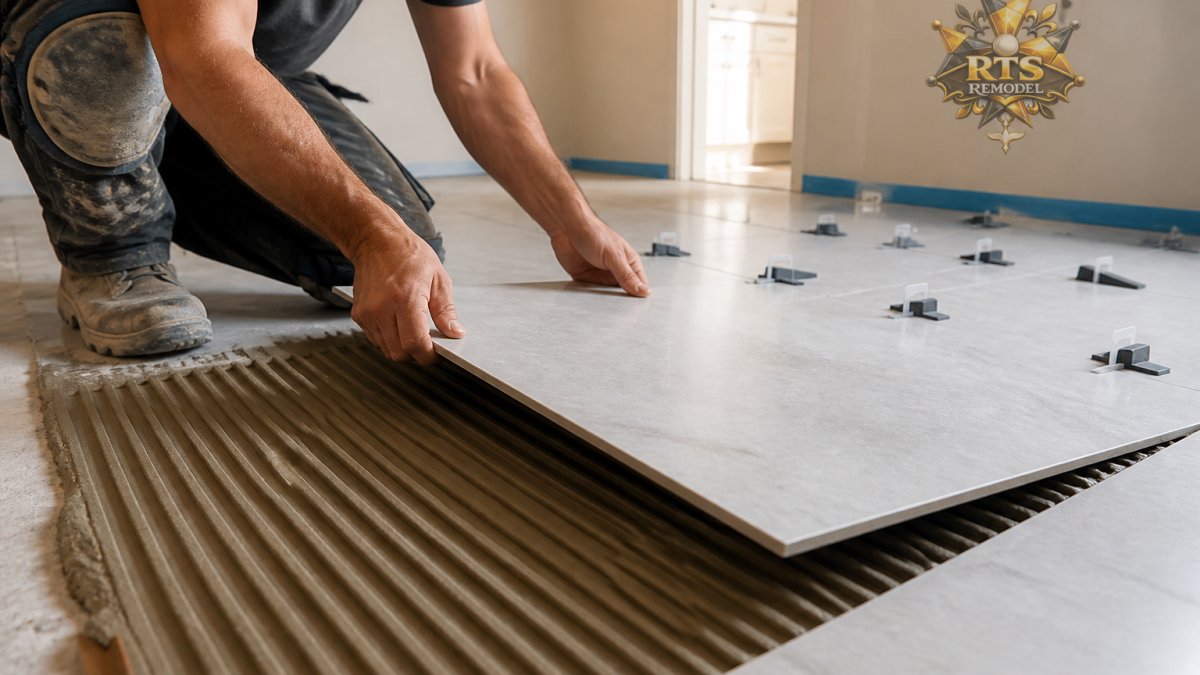
Use a notched trowel that creates ridges 3/16 to 1/4 inch tall, depending on your substrate and tile weight. With large-format tile, you need 95% full coverage behind the tile, which means back-buttering (applying mortar to the tile back) is essential. The combined ridges and back-butter should achieve the depth required for your specific tile and substrate combination.
Should I use modified or unmodified mortar for large-format porcelain tile?
Modified mortar is the safer choice for large-format porcelain tile. Polymer-modified thinset offers better flexibility, longer working time, and superior bond strength, all critical for heavy, rigid tiles. Unmodified mortar is thinner and dries faster, making it harder to achieve full coverage and proper adhesion on large-format applications, especially over concrete or cement board.