 comparison
Best Flooring for Small Bathroom Remodel in 2026
Table of Contents
- Best Flooring for a Small Bathroom Remodel: What Actually Works
- What Size Tile Is Best for a Small Bathroom
- Porcelain vs Ceramic Tile Bathroom Floor: Which Holds Up Better
- Small Bathroom Floor Tile Layout and Slip-Resistant Bathroom Flooring
- Why the Floor Beneath the Tile Matters
- Matching the Floor to the Room and the Household
- When to Bring In a Professional
- Frequently Asked Questions
Last Updated: October 13, 2026
Best Flooring for a Small Bathroom Remodel: What Actually Works
The best flooring for small bathroom remodel projects usually comes down to porcelain tile: it handles water and traffic and comes in sizes that make a tight room look intentional.
Flooring Options at a Glance
| Material | Water Resistance | Maintenance | Best For |
|---|---|---|---|
| Porcelain tile | High | Low | Most small bathrooms |
| Ceramic tile | Moderate to high | Low | Budget-conscious remodels |
| Natural stone | Moderate, needs sealing | Higher | High-end, low-traffic baths |
| Luxury vinyl tile/plank | High | Very low | Quick, budget-friendly updates |
| Sheet vinyl | High | Very low | Rental or temporary fixes |
| Engineered wood | Low | Moderate | Dry areas only, not recommended |
Tile wins in wet rooms, vinyl is the practical budget pick, and wood or laminate don't belong on a bathroom floor.
What Size Tile Is Best for a Small Bathroom
What size tile is best for a small bathroom? For most, 12x24 inch tile reduces grout lines and reads as one continuous surface, visually expanding the room. Smaller tiles and mosaics work best on shower floors, where more grout lines provide grip.
Big tile works in a small room only if the layout is planned around the room's actual shape. A 12x24 tile dropped into a 5x8 bath without a plan creates awkward slivers at the walls; the fix is centering the layout and pushing cuts to the perimeter.
Porcelain vs Ceramic Tile Bathroom Floor: Which Holds Up Better
Porcelain wins for bathroom floors in almost every case. It's denser and less porous than ceramic, so it absorbs less water and holds up better in a damp room.
Porcelain is fired at higher temperatures with denser clay, giving it a lower water absorption rate (Porcelain vs. Non-Porcelain).
Ceramic still makes sense for shower and backsplash walls, powder rooms, and tight budgets where savings go toward waterproofing. Porcelain is worth the upgrade for any bathroom floor, shower floors and walls, and heated floor installations.
Slip Resistance and Wet-Foot Safety
Slip resistance is measured by a tile's DCOF rating (Dynamic Coefficient of Friction). The higher the number, the more grip when wet, check the manufacturer's DCOF value before you buy.
Glossy tile looks great in photos but gets slick fast when wet. Better for wet zones: matte and honed finishes, textured or wood-look tile, and smaller tiles with more grout lines in the shower pan.
Small Bathroom Floor Tile Layout and Slip-Resistant Bathroom Flooring
A good tile layout makes the room look bigger and keeps the floor safe underfoot, both come from planning the pattern, tile size, and grout lines before installation.
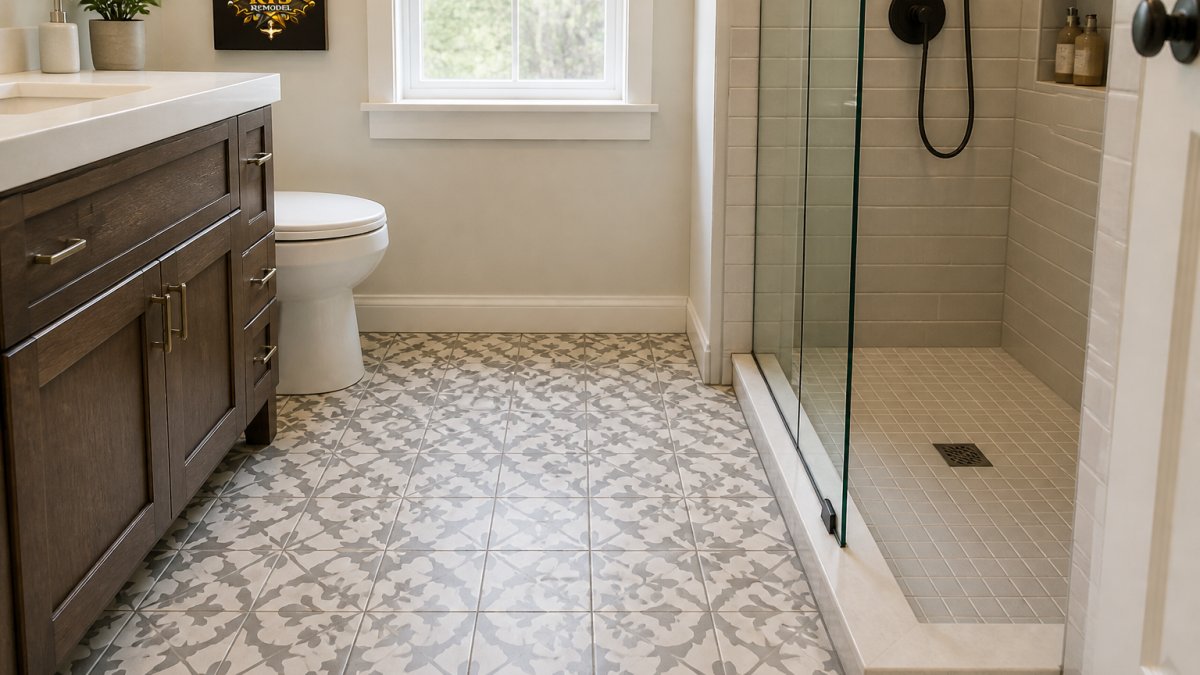
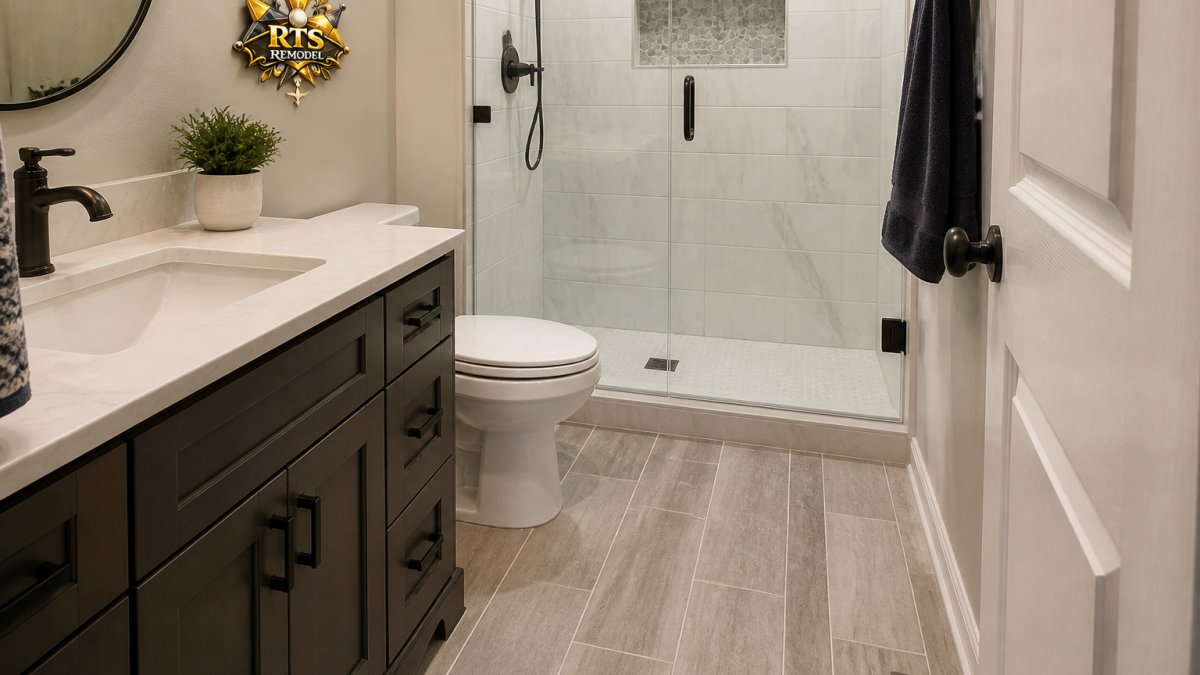
For a small bathroom: run tile parallel to the longest wall to stretch the room visually, use a simple grid or offset pattern, keep grout lines thin and consistent, and match grout color to tile for a seamless look. In the shower, small mosaic tile with more grout lines gives better grip than large-format tile with a slick surface.
Why the Floor Beneath the Tile Matters
The tile is only as good as what's under it. A floor that cracks, pops, or feels hollow almost always traces back to the subfloor or waterproofing, not the tile.
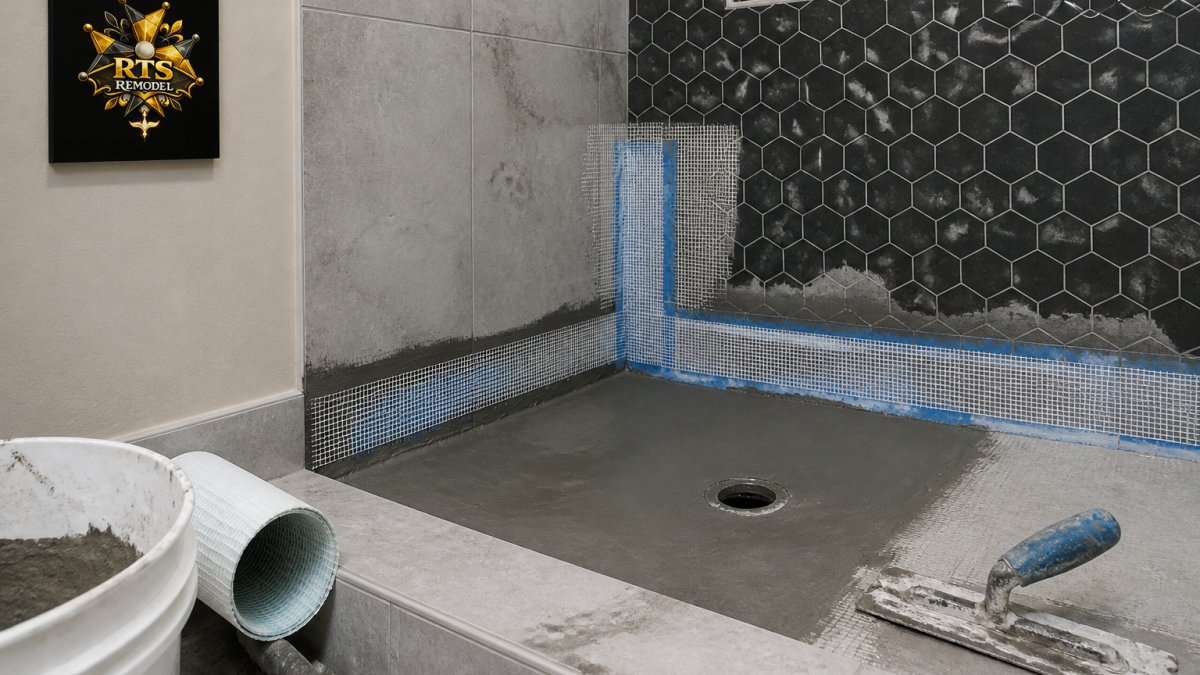
Moisture, temperature swings, and fixture weight all stress the assembly. If the subfloor flexes, the tile and grout above it will crack, substrate prep isn't a step to rush. A proper assembly includes a sound, level, rigid subfloor, a crack isolation or uncoupling membrane where needed, waterproofing in wet zones, the correct thinset, and expansion gaps at the perimeter.
A Note on Grout and Maintenance
Grout choice affects looks and upkeep. Cement-based grout needs sealing and can stain; epoxy grout resists stains and moisture better but costs more and takes more skill to install cleanly. For small bathrooms, epoxy grout in the shower and quality sealed grout elsewhere keeps maintenance low. Clean with a pH-neutral cleaner and avoid harsh acidic products that etch grout and natural stone.
Matching the Floor to the Room and the Household
The best flooring for small bathroom remodel projects isn't automatically the same from one room to the next. A high-traffic family bath needs a different floor than a guest bath used twice a month.
A quick way to decide: high-traffic family bath, porcelain tile, matte finish, epoxy grout in wet zones; guest or powder room, ceramic or porcelain, any finish; rental or quick flip, luxury vinyl or sheet vinyl; high-end primary bath, natural stone or large-format porcelain, sealed and maintained.
When to Bring In a Professional
Some flooring projects are genuinely DIY-friendly. A small bathroom floor with a tricky layout, a curbless shower, or an older subfloor usually isn't one of them.
At RTS Remodel, we handle complete bathroom transformations across Boise, Meridian, Eagle, Star, Kuna, and the Treasure Valley, from demolition and substrate prep through waterproofing and final tile details.
If you're weighing materials or planning a small bathroom remodel, reach out for an estimate and we'll walk you through what fits your space, household, and budget.
Tile Council of North America installation standards and DCOF guidance
National Tile Contractors Association technical resources
Frequently Asked Questions
What flooring is best for a small bathroom?
Porcelain tile is the most reliable choice for small bathroom flooring because it resists moisture, scratches, and stains, and it comes in formats that suit tight layouts. Luxury vinyl plank is a lower-cost alternative that installs quickly and feels warmer underfoot. For a small bathroom remodel, the deciding factors are usually subfloor condition, slip resistance, and how the tile size affects the visual space.
Is porcelain or ceramic tile better for a bathroom floor?
Porcelain is denser and absorbs less water than ceramic, which makes it the safer pick for a bathroom floor that sees regular moisture. Ceramic costs less and offers plenty of color and pattern options, but it is better suited to walls or low-traffic areas. In a small bathroom, porcelain's stain and scratch resistance usually justifies the difference in material cost.
Is luxury vinyl flooring a good choice for a small bathroom?
Luxury vinyl plank and luxury vinyl tile are budget-friendly, low-maintenance options that handle moisture well and install fast over many existing subfloors. The trade-off is lifespan: vinyl wears faster than tile and cannot be refinished. If you plan to stay in the home long term, tile usually delivers better lifecycle value; if you need a quick, lower-cost floor replacement, vinyl is a reasonable choice.
A small bathroom floor has to do more than look good. It has to handle moisture, traffic, and the kind of daily wear that shows up in a tight space faster than anywhere else in the house. RTS Remodel brings a detail-driven approach to complete bathroom remodels, with a focus on substrate preparation, waterproofing, and finish work that holds up. Get started with RTS Remodel and turn a small, tired bathroom into a room that works as well as it looks.