 how-to
Preventing Cracked Grout in Bathrooms: 2026 Guide
Table of Contents
- Why Grout Cracks: The Real Causes Homeowners Miss
- Proper Substrate Preparation for Tile That Lasts
- Epoxy vs Cement Grout for Bathrooms: Which Holds Up
- How to Fix Cracked Shower Grout: A Step-by-Step Repair
- Silicone Caulk at Changes of Plane: The Detail That Prevents Cracks
- Sealing, Maintenance, and Preventing Future Grout Failure
- Conclusion
- Frequently Asked Questions
Last Updated: September 27, 2026
Why Grout Cracks: The Real Causes Homeowners Miss
Preventing cracked grout starts with one fact: grout is the weakest part of any tile assembly. It is cement-based, porous, and rigid. Tile moves. Grout does not. When the two fight, grout loses.
At RTS Remodel, we have torn out enough failed showers across the Treasure Valley to know the pattern. The crack you see on the surface almost never started there.
Grout cracks for three main reasons:
- Movement in the floor or wall behind the tile
- Thermal expansion and contraction from hot showers and cold rooms
- Moisture swelling the wood framing and substrate
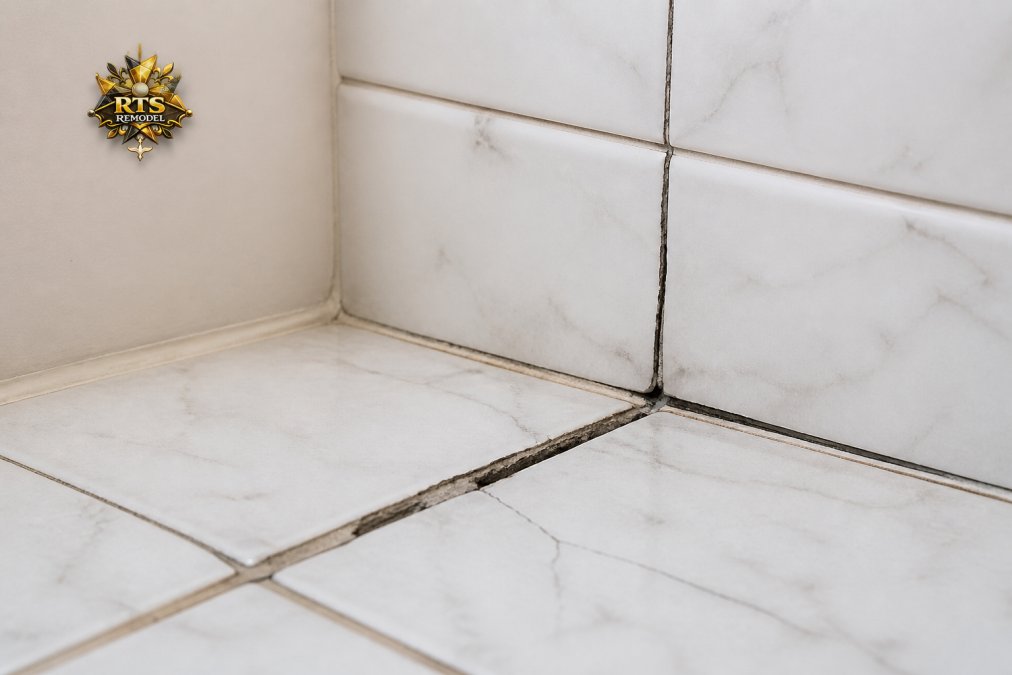
A hairline crack at a change of plane is normal. A crack running through the middle of a field of tile is a warning sign.
Subfloor Deflection and Structural Movement
Subfloor deflection is the downward flex of a floor under weight. If joists are undersized, spaced too far apart, or the span is too long, the floor bends underfoot. Tile cannot bend, so the grout cracks.
You can check for deflection before you ever set tile with a simple bounce test: fill a glass with water, set it on the subfloor, and walk past it. If the water ripples, the floor moves too much for tile.
The fix is structural, not cosmetic:
- Sister or add floor joists to stiffen the span
- Add a second layer of plywood to build up the subfloor
- Use an uncoupling membrane to separate tile from substrate movement
Thermal Expansion, Contraction, and Moisture
Tile and grout expand and contract at different rates. A hot shower heats the wall; the room cools overnight. Over hundreds of cycles, that movement works the grout loose. Moisture makes it worse: cementitious grout absorbs water, and when the substrate swells, the grout has nowhere to go but crack.
Contraction and expansion joints exist for exactly this reason. Skipping them, or grouting over them, is one of the most common installation mistakes we see.
Proper Substrate Preparation for Tile That Lasts
Proper substrate preparation is the single biggest factor in whether grout survives. A flat, stable, waterproof base is not optional, it is the whole job.
Here is what a correct substrate looks like:
- Flat within 1/8 inch over 10 feet for large-format tile
- Structurally sound, with no deflection beyond tile standards
- Clean and primed, so thinset mortar bonds properly
- Waterproofed in every wet area before tile goes down
The substrate is the part you never see again. That is exactly why it gets rushed.
Uncoupling Membranes and Waterproofing
An uncoupling membrane separates the tile from the substrate so each moves independently, absorbing stress that would otherwise crack your grout. Waterproofing works alongside it: in a shower, a bonded membrane goes over the substrate and behind the tile. Grout and tile are not waterproof on their own, water vapor passes through them.
Get the waterproofing wrong and you get more than cracked grout:
- Mold growth behind the wall
- Rotting framing
- Tiles popping off the wall
- Water damage in the room below
A bonding agent and the right thinset mortar complete the system. Each layer has a job.
Epoxy vs Cement Grout for Bathrooms: Which Holds Up
The grout you choose is the biggest variable you control when it comes to cracking. Both families fail, but for different reasons, understanding the mechanism lets you pick the right one for a shower floor versus a powder room backsplash.
Cementitious grout is Portland cement, sand, and pigments. It cures by hydration, shrinking slightly as it dries, which opens hairline cracks along the joint, especially in wide joints or when mixed too wet. It is also porous, so water vapor moves through it and reaches the substrate behind the tile. Over hundreds of hot-and-cold cycles, the grout line becomes the path of least resistance, and that is where the crack shows up.
Epoxy grout is a two-part resin and hardener. It cures by chemical reaction, not drying, so it shrinks far less. The cured matrix is dense and non-porous, it does not absorb water and does not need sealing, and it has more give than cement grout, tolerating small movements at every change of plane and thermal cycle. That is why epoxy holds up better in wet areas.
The trade-off is real: epoxy is harder to install, has a shorter working time, and demands careful mixing and cleanup. A poorly mixed epoxy joint can look worse than a clean cement joint.
| Feature | Cement Grout | Epoxy Grout |
|---|---|---|
| Curing method | Hydration (shrinks slightly) | Chemical reaction (minimal shrink) |
| Moisture absorption | High | Very low |
| Flexibility | Low | Moderate |
| Stain resistance | Needs sealer | Built-in |
| Curing time | 24-72 hours | 12-24 hours |
| Installation difficulty | Easy | Demanding |
| Best for | Dry areas, budget | Showers, wet areas |
Grout Additives and Flexible Polymers
Not every job needs epoxy. That is where grout additives come in: a liquid polymer replaces the water in a cement grout mix, coating the cement particles and forming a flexible film inside the cured joint. The result handles minor movement better than plain cement grout and absorbs less water, the middle ground between standard cement grout and epoxy.
How to Fix Cracked Shower Grout: A Step-by-Step Repair
Fixing cracked shower grout is a DIY job for small, cosmetic cracks. If the crack is wide, recurring, or the tile is loose, call a professional.
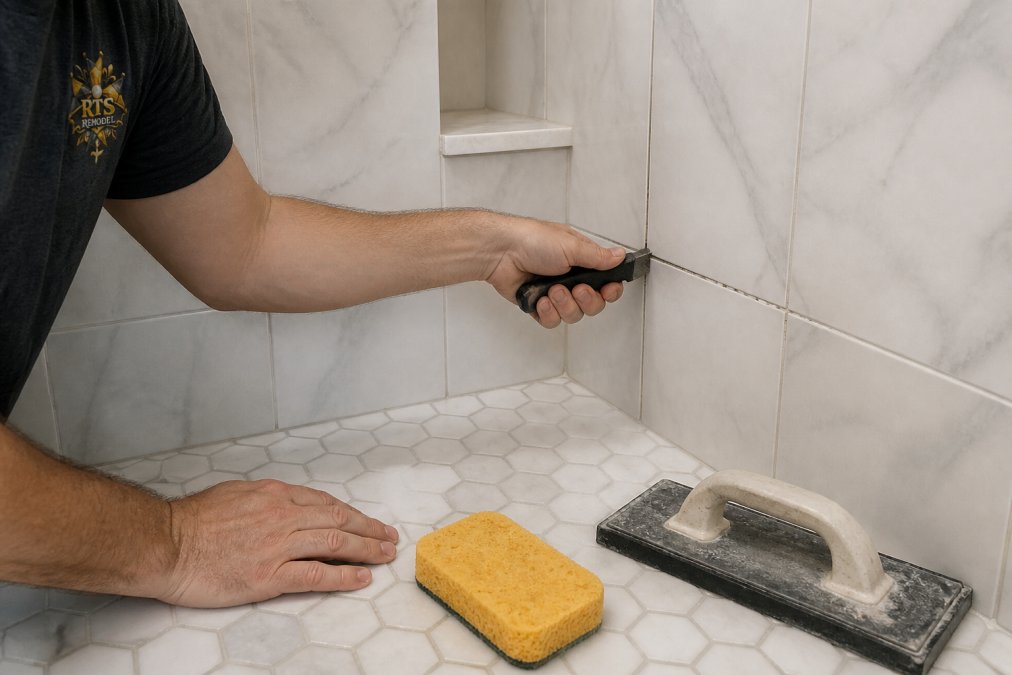
What you'll need:
- Grout rake or oscillating tool with a carbide blade
- Vacuum and damp sponge
- Matching grout and grout float
- Grout sealer
- Color-matched caulk for corners
Silicone Caulk at Changes of Plane: The Detail That Prevents Cracks
Silicone caulk belongs at every change of plane, grout does not. This detail separates a shower that lasts from one that leaks.
- Where the wall meets the shower floor
- Where two walls meet in a corner
- Where tile meets a tub, a curb, or a bench
Sealing, Maintenance, and Preventing Future Grout Failure
Preventing future grout failure is less about scrubbing harder and more about understanding what your bathroom does to grout daily. A shower is a harsh environment: steam, hot water, cold mornings, and constant humidity work on the tile assembly in cycles, and grout shows the stress first.
Environmental Factors That Age Grout
Every hot shower heats the wall and floor; every cool-down contracts them. Tile, grout, thinset, and substrate expand and contract at different rates, and over hundreds of cycles that mismatch works the grout loose at the joint edges. Humidity makes it worse: cement grout absorbs moisture, and when the substrate behind it takes on humidity, the grout has nowhere to go but crack.
Sealing: What It Does and Does Not Do
A penetrating sealer soaks into cement grout and slows moisture absorption. It does not make grout waterproof or stop movement. Reapply it once a year in showers and wet areas. Epoxy grout needs no sealing because it is already non-porous. For cleaning, skip harsh acids and abrasive pads, they wear down grout and strip sealer. A pH-neutral cleaner and soft brush handle most bathroom grime without opening the pores you just sealed.
A Visual Diagnostic Guide: Cosmetic Crack vs. Structural Crack
Not every crack means the same thing. Here is how to read what you are seeing.
A Simple Maintenance Rhythm
Every few months, walk the bathroom and check the inside corners, floor-to-wall joints, shower curb, and bench, the spots that move most. If a caulk joint is cracking, refresh it. If a grout joint is cracking across the field, get a professional opinion before you spend a weekend re-grouting a symptom. That rhythm, plus proper ventilation and a once-a-year sealer refresh on cement grout, keeps grout looking sharp between remodels.
Conclusion
Cracked grout is rarely a grout problem. It is a movement, moisture, or substrate problem showing up on the surface. Fix the cause and the grout holds. Skip it and you will be re-grouting the same joint next year.
Frequently Asked Questions
Why is the grout in my bathroom cracking?
Cracked grout usually comes from movement, not age. Subfloor deflection, thermal expansion and contraction, or a missing expansion joint at changes of plane all stress the grout until it splits. Hairline cracks often trace back to a floor that flexes underfoot, while cracks along a wall-to-floor seam point to rigid grout where flexible caulk belongs.
Can you just grout over cracked grout?
No. Grouting over a crack hides it for a few weeks at most. The crack will telegraph through the new grout because the underlying movement never stopped. The right fix is to rake out the old grout with a grout rake or carbide blade, clean the joint, and refill with a flexible or epoxy grout, or caulk at transitions.
How do I make sure grout does not crack?
Control the two things grout cannot handle: movement and moisture. Proper substrate preparation for tile, including a flat, rigid subfloor and an uncoupling membrane, limits deflection. Flexible grout or epoxy grout handles minor movement, and color-matched silicone caulk at every change of plane gives the joint somewhere to move without cracking.
Does movement in the house cause grout to crack?
Yes. Floor joists flex, framing settles, and tile expands and contracts with temperature and humidity. Grout is the least flexible part of the assembly, so it cracks first. Expansion joints and flexible sealant at perimeters and transitions let the structure move without transferring that stress into the grout.