 How-to
Benefits of Heated Bathroom Floors in Treasure Valley
Table of Contents
- Why Heated Bathroom Floors Make Sense in Treasure Valley
- Bathroom Floor Heating Pros and Cons
- Radiant Floor Heating Under Tile: What to Know Before You Install
- Frequently Asked Questions
Last Updated: October 18, 2026
Why Heated Bathroom Floors Make Sense in Treasure Valley
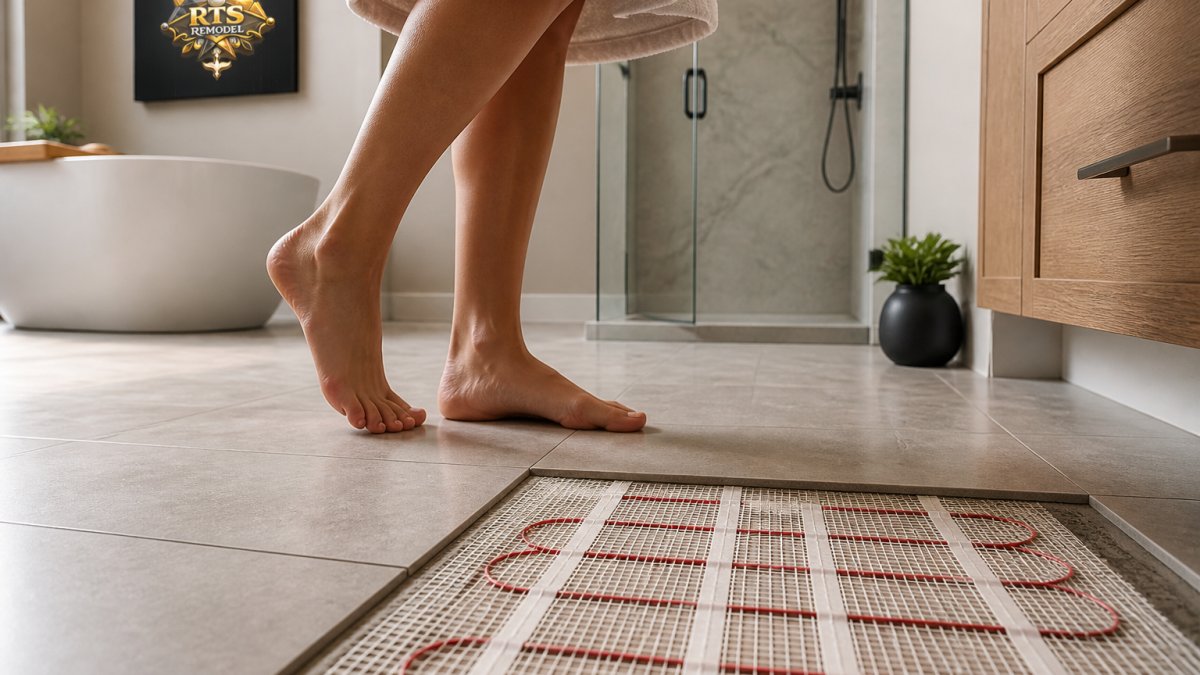
Heated bathroom floors run radiant heat directly beneath the tile, turning a cold surface into the warmest spot in the house. We install them often in Treasure Valley bathrooms because winter mornings here sit near freezing and tile holds that chill.
Warmth rises through the tile, so the room feels comfortable from the feet up, and it adds supplemental heat without blowing dust like a forced-air vent.
The benefits homeowners ask us about most:
- No more cold tile on bare feet at 6 a.m.
- Even warmth across the whole floor
- Dries the floor faster after showers
- A comfort upgrade buyers notice
Bathroom Floor Heating Pros and Cons
The honest trade-off is comfort versus upfront cost and installation complexity.
Pros: warm tile underfoot all winter, no ductwork or visible equipment, works under most tile and stone.
Cons: adds cost and time to the install, raises finished floor height slightly, needs a dedicated circuit for electric systems.
The pros win for most full bathroom remodels. If the tile is already coming out, that is the moment to add it.
Radiant Floor Heating Under Tile: What to Know Before You Install
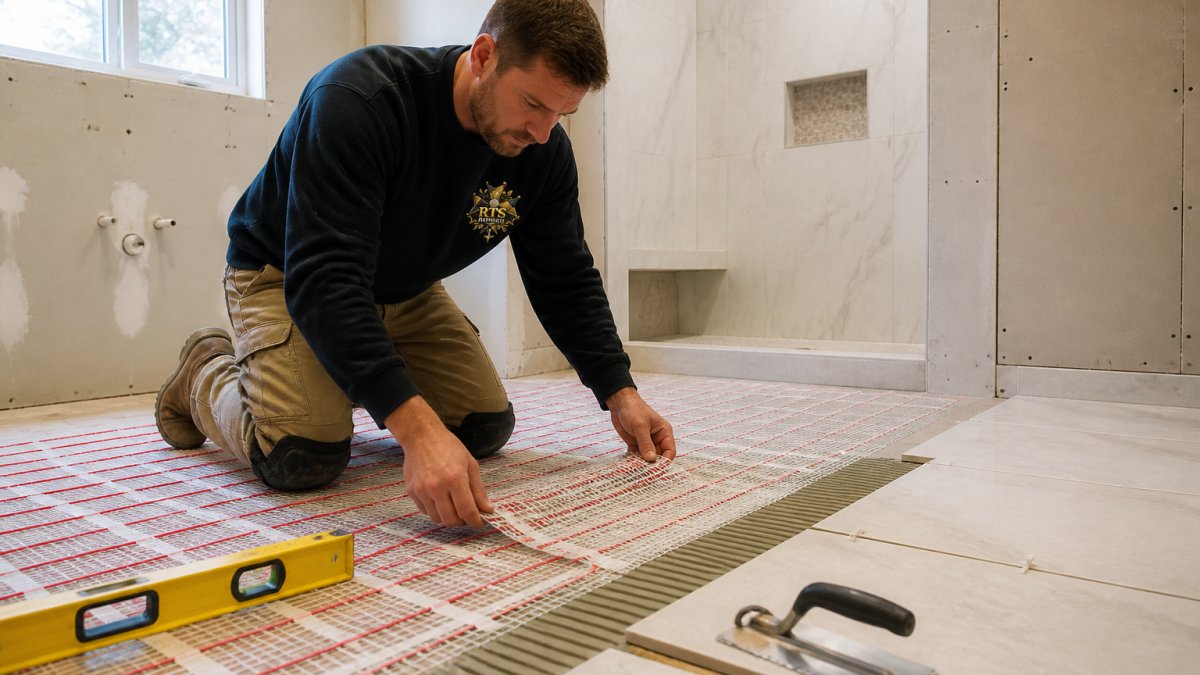
Radiant floor heating under tile starts with the substrate, not the mat. The subfloor must be flat, sound, and clean first.
Two systems dominate bathroom projects:
| System | How It Works | Best For |
|---|---|---|
| Electric mat | Thin heating cable in a mat | Single bathrooms, remodels |
| Hydronic | Warm water in tubing | Whole-home or large projects |
For most bathroom remodels, electric is the practical pick: thinner, faster to install, easier to zone.
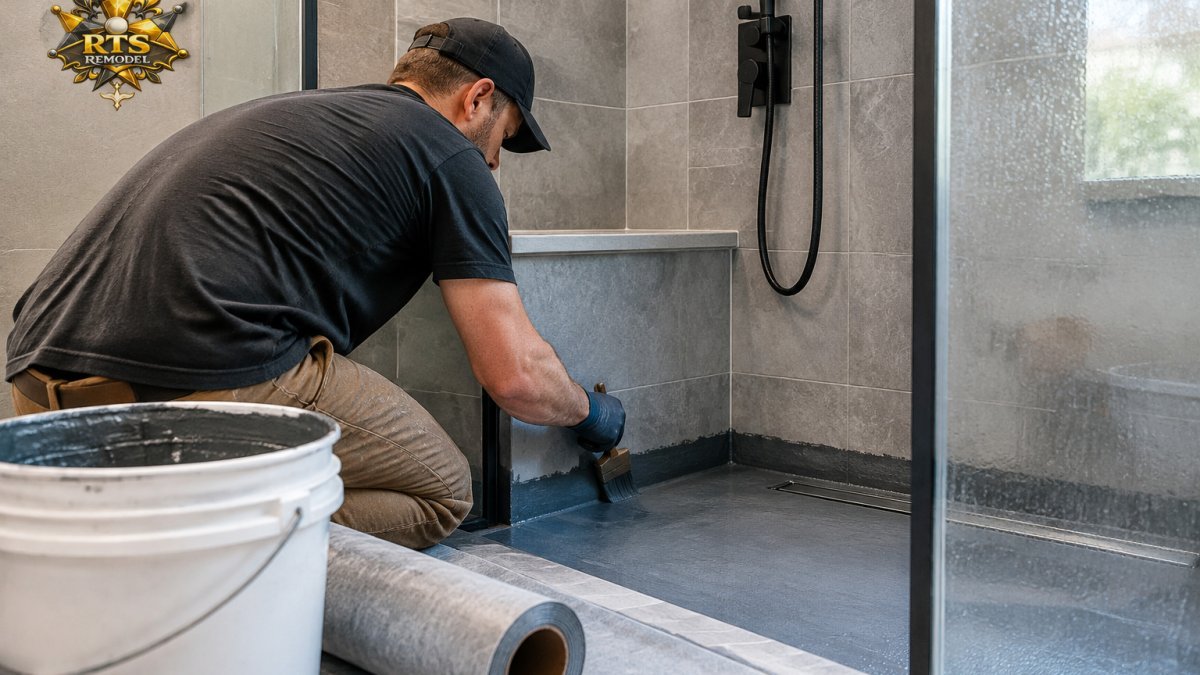
Sequence matters. We prep and level the subfloor, install waterproofing and backer board, lay the mat and floor sensor, test the circuit, set tile, then grout, seal, and wire the thermostat.
Porcelain, ceramic, and most natural stone work well; check with the system maker on thick stone and wood-look products.
Most homeowners run the floor a few degrees above room temperature and lower it when away.
Hidden work, done right, keeps the floor warm for years. Planning a bathroom or kitchen remodel in Boise, Meridian, Eagle, Star, or Kuna? Request an estimate from RTS Remodel and we will walk you through whether heated floors fit your project.
Frequently Asked Questions
Do heated bathroom floors add value to a home?
Heated bathroom floors are a recognized comfort upgrade that can improve resale appeal, especially in colder climates like the Treasure Valley. Buyers touring homes in Boise, Meridian, or Eagle often see warm tile as a sign of a well-planned remodel. The actual return depends on your home's price point and finish quality, but the feature rarely hurts and often helps a bathroom stand out. It pairs well with a complete bathroom remodel when you are already updating the subfloor and tile.
Do heated bathroom floors use a lot of electricity?
Electric floor heating typically draws modest power because it runs only when needed and warms a small area. Heated floors energy use depends on the square footage, insulation, and thermostat schedule. In a typical bathroom, running the system for short morning and evening windows costs less than heating the whole room with a central system. A programmable thermostat with a floor sensor keeps runtime efficient, and many homeowners treat it as supplemental warmth rather than primary heat.
Can heated floors be installed under porcelain or natural stone tile?
Yes. Radiant floor heating under tile is a common pairing because tile holds and transfers heat well. Porcelain, ceramic, and natural stone all work when the substrate is flat, the heating mat is embedded properly in thinset or self-leveling compound, and the installer accounts for the added floor height. Natural stone may need extra attention to sealing and movement joints. During a remodel, we plan the heating layout alongside waterproofing and tile layout so nothing gets compromised.