 listicle
Best Tile Materials for Custom Shower Walls
Table of Contents
- Porcelain Tile: The Durable Standard
- Ceramic Tile: Versatility and Design Options
- Natural Stone, Glass, and Specialty Options
- Frequently Asked Questions
Last Updated: October 9, 2026
Porcelain Tile: The Durable Standard
When selecting the best tile materials for custom shower walls, porcelain tile is the most reliable choice because it resists water absorption almost entirely. Fired above 2,400 degrees Fahrenheit, it becomes a non-porous, glass-hard surface that won't swell, crack, or harbor mold.
Its water absorption rate sits below 0.5%, so water stays on the surface instead of migrating into the substrate.
Porcelain mimics natural stone, wood, or concrete, so you're not sacrificing aesthetics for performance. Large-format panels minimize grout lines, but porcelain is harder to cut than ceramic and requires diamond blades and experienced hands to avoid chipping.
Ceramic Tile: Versatility and Design Options
Ceramic tile offers more design flexibility than porcelain at a lower material cost. It's lighter, easier to cut, and available in a huge range of glazes, textures, and finishes.
The downside is water absorption. Ceramic absorbs more moisture than porcelain, so it requires sealed grout lines and a strong waterproofing membrane behind it.
Textured ceramic hides minor substrate imperfections better than smooth surfaces.
Natural Stone, Glass, and Specialty Options
Natural stone, marble, slate, or granite, creates a high-end look with unique veining ceramic or porcelain can't replicate. But it needs sealing and ongoing maintenance, is softer than porcelain, and etches more easily from acidic cleaners.
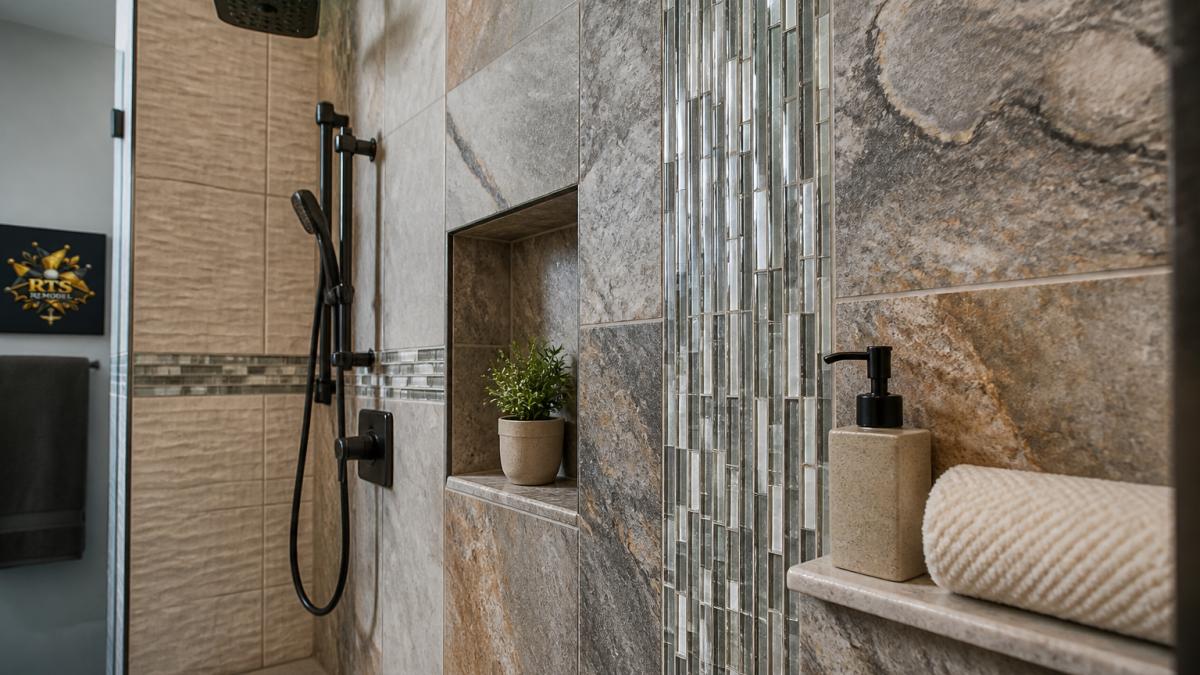
Glass mosaic tiles reflect light and add depth to smaller bathrooms. They're non-porous and resist mold, but installation is precise work, visible adhesive lines ruin the effect.
Large-format porcelain panels suit minimalist design with fewer grout lines to clean, and leathered stone finishes hide water spots better than polished surfaces.
| Material | Water Resistance | Maintenance Level | Design Variety | Best For |
|---|---|---|---|---|
| Porcelain Tile | Excellent | Low | High | Most custom showers |
| Ceramic Tile | Moderate | Moderate | Very High | Budget-conscious designs |
| Natural Stone | Moderate | High | High | Luxury aesthetics |
| Glass Mosaic | Excellent | Low | Moderate | Accent walls |
| Large-Format Panels | Excellent | Low | Moderate | Contemporary styles |
The material you choose shapes the entire installation, substrate prep, waterproofing, grout selection, and sealing all shift based on it, which is why understanding the best tile materials for custom shower walls matters before you start. The best tile material for your shower depends on your maintenance tolerance, design vision, and whether your substrate can handle the weight and moisture.
At RTS Remodel, we specialize in Custom Showers & Tile and Tile & Stone Installation across Boise, Meridian, Eagle, Star, Kuna, and the greater Treasure Valley. We know which combinations of substrate, waterproofing, and tile hold up over time. If you're planning a custom shower and want to understand which material will perform best in your space, contact us for an estimate.
Frequently Asked Questions
Are porcelain tiles better than ceramic for shower walls?
Porcelain tile performs better in wet environments. It has a water absorption rate below 0.5%, compared to ceramic's higher porosity. This makes porcelain more resistant to mold and mildew over time. Ceramic works for shower walls when paired with proper waterproofing and substrate preparation, but porcelain requires less maintenance and offers superior durability in constant moisture exposure.
What makes large format tile installation different for custom shower walls?
Large-format tiles (24x48 inches or larger) minimize grout lines, creating a seamless appearance and reducing maintenance. However, they require precision in substrate preparation and professional handling to prevent breakage. The larger surface area means any substrate imperfection becomes visible, so backer board installation and waterproofing membranes must be flawless. Professional installation ensures proper thin-set coverage and prevents lippage issues.
Why is waterproofing shower walls critical before tile installation?
Waterproofing protects the substrate from moisture penetration, which causes mold, mildew, and structural damage behind the tile. Even small gaps in grout lines allow water to reach the backer board. A quality waterproof membrane applied to the substrate before tiling creates a complete moisture barrier. This hidden work determines whether your shower remains sound for decades or develops problems within a few years.
The difference between a shower that looks good for a year and one that performs flawlessly for decades comes down to material selection and installation precision. Porcelain tile paired with proper waterproofing and expert installation gives you the best combination of durability, aesthetics, and low maintenance. Contact RTS Remodel for an estimate on your custom shower project, and let's discuss which materials will deliver the performance and look you're after.