 How-to
Dust Control During Bathroom Renovations: A Step-by-Step Plan
Last Updated: November 7, 2026
Quick Summary
Dust control during a bathroom renovation starts with a sealed containment zone before demolition begins. Hang heavy plastic over the doorway with a zippered opening, tape every edge, cover nearby vents, and run a HEPA air cleaner while work continues. Clean up daily with a HEPA vacuum and damp wiping.
- Hang heavy plastic over the doorway with a zippered opening
- Tape all edges, including the floor and ceiling, with painter's tape
- Cover supply and return vents near the work area
- Run a HEPA air cleaner continuously during demolition
- Vacuum with a HEPA-rated shop vacuum, then wipe surfaces damp
Table of Contents
- Set Up a Containment Zone Before Demolition Starts
- Run an Air Cleaner and Keep Airflow Under Control
- Clean Up Renovation Dust Daily and Plan for How Long It Lingers
- Frequently Asked Questions
Set Up a Containment Zone Before Demolition Starts
Dust control starts before the first tile comes off the wall. A sealed work zone keeps fine particles from drifting into the rest of your home.
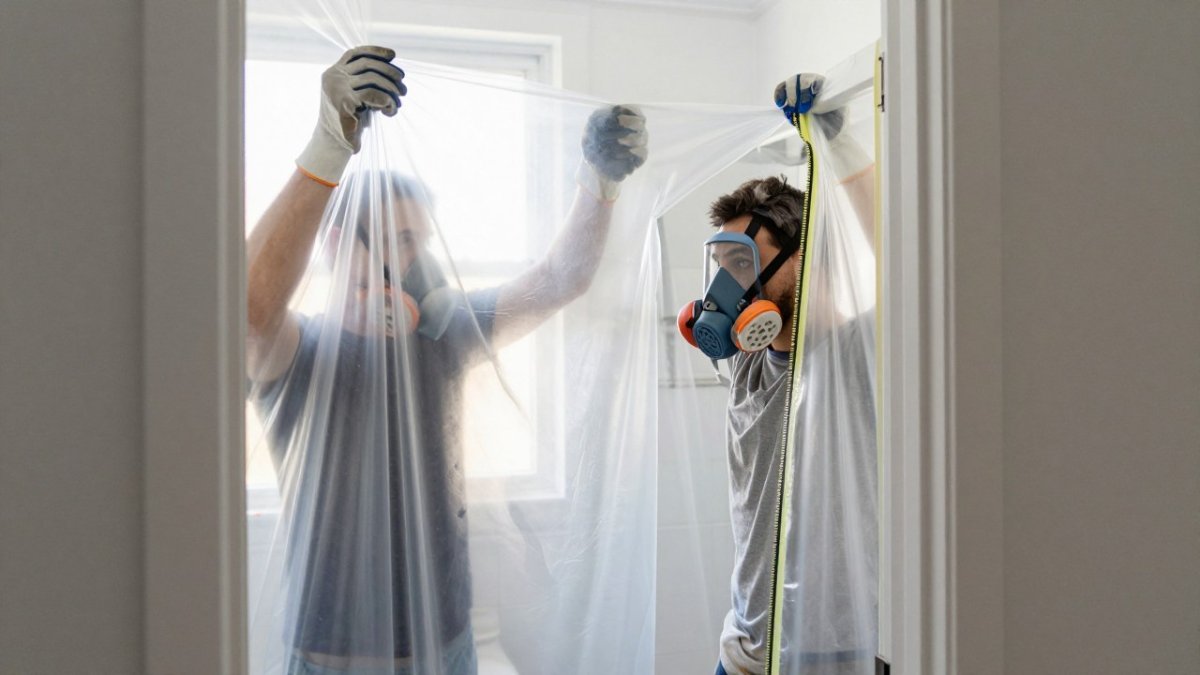
Hang heavy plastic sheeting over the bathroom doorway, and close it with a zippered opening so crews can pass through without pulling the barrier down. Seal every edge with painter's tape. Cover floors and vents in adjacent rooms too.
- Seal the doorway with plastic and a zippered opening
- Tape all edges, including the floor and ceiling
- Cover supply and return vents near the work area
- Keep the bathroom door closed while work runs
For more on sequencing the bathroom work itself, see our Shower Waterproofing Before Tiling: A Step-by-Step Guide.
Here is how the main containment steps stack up so you can check them quickly.
| Step | What to do | Note |
|---|---|---|
| Doorway barrier | Hang heavy plastic with a zippered opening | Crews pass through without pulling it down |
| Edge sealing | Tape all edges, including floor and ceiling | Use painter's tape |
| Vent protection | Cover supply and return vents near the work area | Covers adjacent rooms too |
| Door discipline | Keep the bathroom door closed while work runs | Limits dust drift into the home |
Run an Air Cleaner and Keep Airflow Under Control
Air movement decides where dust goes. A portable air cleaner with a HEPA filter, set inside the containment zone, helps catch particles before they escape. Point any window exhaust fan outward so air leaves the room instead of crossing into living space.
Avoid box fans pointed at the doorway. They push dust through gaps in the plastic.
- Run a HEPA air cleaner continuously during demolition
- Exhaust air outside through a window when possible
- Shut off the HVAC return near the bathroom
Clean Up Renovation Dust Daily and Plan for How Long It Lingers
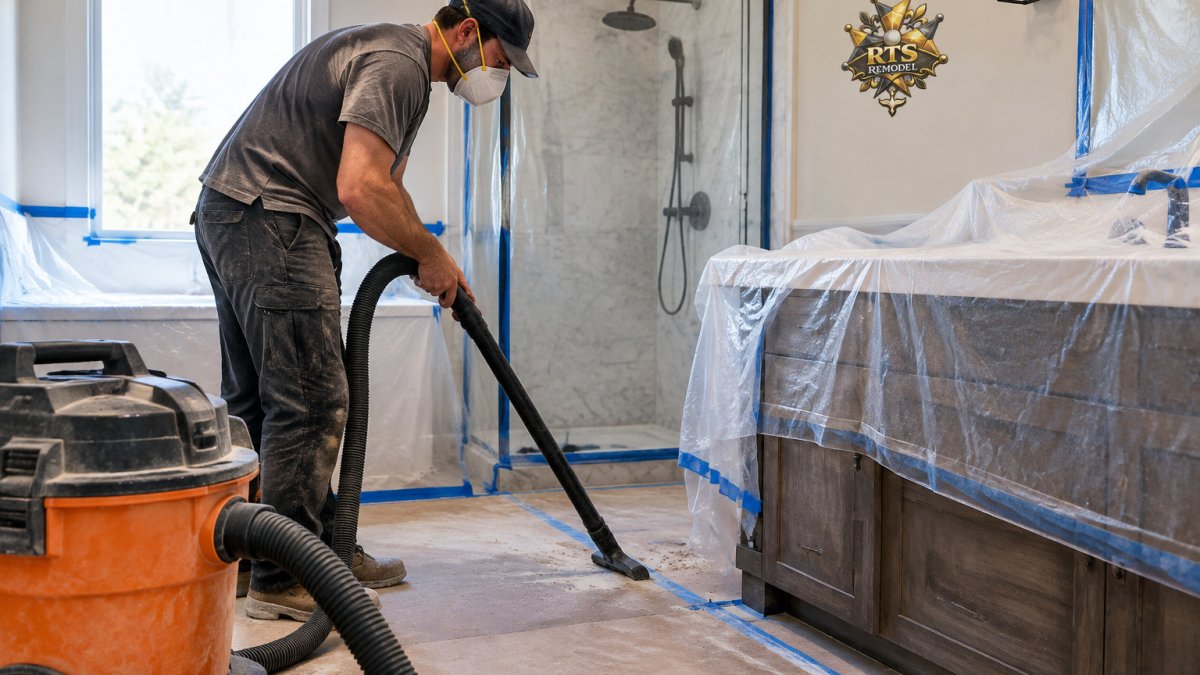
Renovation dust settles on every surface, and it does not disappear when the work stops. Vacuum with a HEPA-rated shop vacuum, then wipe surfaces damp. Dry sweeping only moves dust back into the air.
Expect fine particles to hang around for days after demolition ends. Keep the containment in place and run the air cleaner for a while after work wraps up. If you want the full project handled cleanly from start to finish, Complete Bathroom Remodeling from RTS Remodel covers that scope, and our bathroom remodel project management checklist can help you plan the daily cleanup and timeline.
Ready to talk through your bathroom remodel? Contact RTS Remodel for an estimate and we will walk through the containment plan for your home.
Frequently Asked Questions
How long does renovation dust take to settle?
Fine renovation dust can stay airborne for hours after the work stops, and some of it settles slowly onto furniture and floors over the following days. The exact time depends on how much demolition happened, how well the work area was sealed and whether an air cleaner was running. Running a filtered air cleaner and wet-wiping surfaces after the work day usually cuts the lingering dust far faster than waiting for it to settle on its own. Plan on daily cleanup for the length of the project, not just one deep clean at the end.
Should I use an air cleaner during bathroom demolition?
Yes. A construction air cleaner with a HEPA-rated filter is one of the most effective tools for capturing fine dust during demolition. Set it inside the work area, pointed away from the doorway, and make sure the room has a controlled exhaust path, such as a window cracked slightly with the exhaust directed outside. Replace filters on schedule, since a clogged filter loses capacity quickly during heavy demolition.
How do I build a dust barrier for a bathroom renovation?
Hang 6-mil plastic sheeting over the bathroom doorway, overlapping the edges and sealing them to the frame and wall with painter's tape or spray adhesive. Leave a zippered or overlapping opening so you can enter and exit without tearing the barrier. Cover floor vents and return air grilles, and close the HVAC system's supply to the bathroom if your system allows it. Inspect the barrier every morning and reseal any gaps before work starts.