 How-to
How to Choose the Right Trowel Notch Size for Your Tile
Last Updated: November 5, 2026
Quick Summary
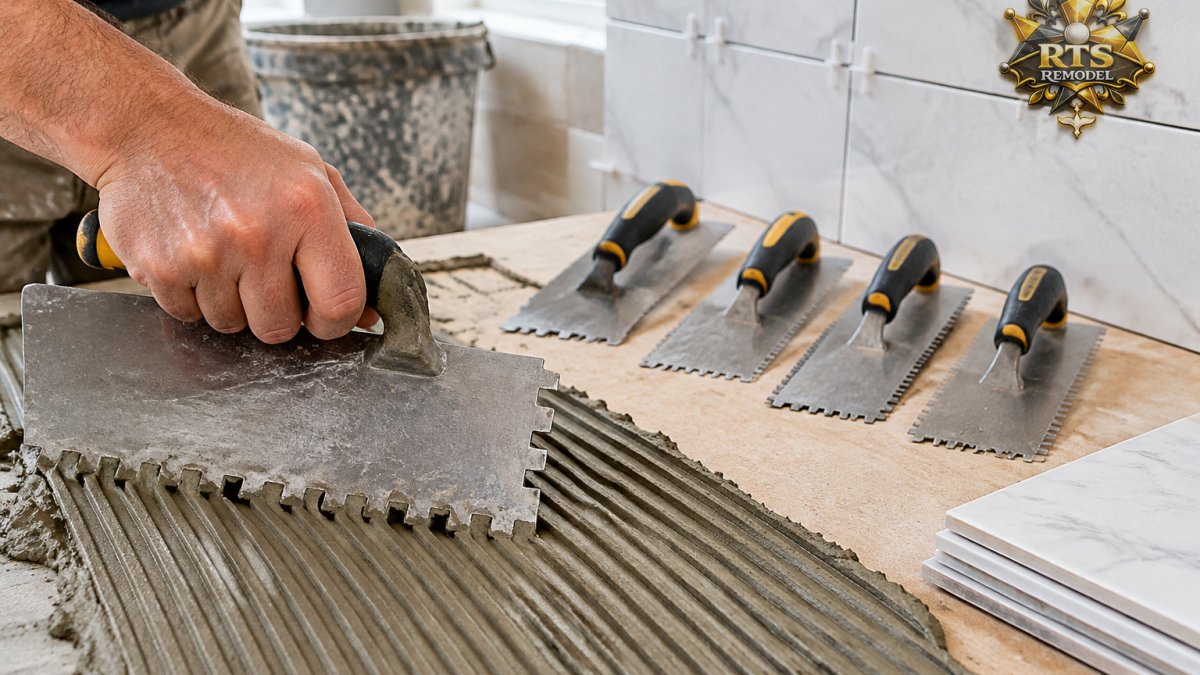
The right trowel notch size depends mainly on tile size. Tiles under 4 inches typically use a 1/4 inch square notch, while 8 to 15 inch tiles use a 1/2 inch square notch. Large-format tile calls for a 1/2 inch or larger notch, and checking the thinset bag and tile manufacturer's recommendation is always wise.
- Tiles under 4 inches typically use a 1/4 inch square notch.
- Standard 4 to 8 inch wall and floor tile suits a 1/4 to 3/8 inch square notch.
- Medium-format 8 to 15 inch floor tile typically uses a 1/2 inch square notch.
- Large-format tile of 15 inches and up calls for a 1/2 inch or larger notch.
- Lift one tile after setting to check that mortar covers the back well.
Table of Contents
- Tile Trowel Size Chart: Matching Notch Size to Tile Size
- Trowel Notch Size for 12x24 Tile and Other Large Formats
- How to Check Tile Mortar Coverage and Square Notch vs. V-Notch Trowel Choices
- Frequently Asked Questions
Tile Trowel Size Chart: Matching Notch Size to Tile Size
Choosing the right trowel notch size is one of the most important steps in a tile installation. The notch controls how much thinset goes under each tile, which affects bond strength and how flat the finished surface sits.
Small tiles need a smaller notch; large-format tiles need a larger notch and more careful coverage. Use this quick guide as a starting point:
| Tile Size | Typical Notch | Best For |
|---|---|---|
| Under 4 inches | 1/4 inch square | Mosaics, small backsplash tile |
| 4 to 8 inches | 1/4 to 3/8 inch square | Standard wall and floor tile |
| 8 to 15 inches | 1/2 inch square | Medium-format floor tile |
| 15 inches and up | 1/2 inch or larger, U or V notch | Large-format tile |
Always check the tile manufacturer's recommendation and the thinset bag, since the right notch can vary by product.
Trowel Notch Size for 12x24 Tile and Other Large Formats
Large tiles like 12x24 need more mortar and tighter control over flatness. A 1/2 inch square notch is a common starting point, but a flat substrate matters just as much. Lippage often comes from uneven mortar rather than the notch itself. If your floor isn't flat enough for large-format tile, our Tile & Stone Installation team can assess the substrate and prep it before any tile goes down.
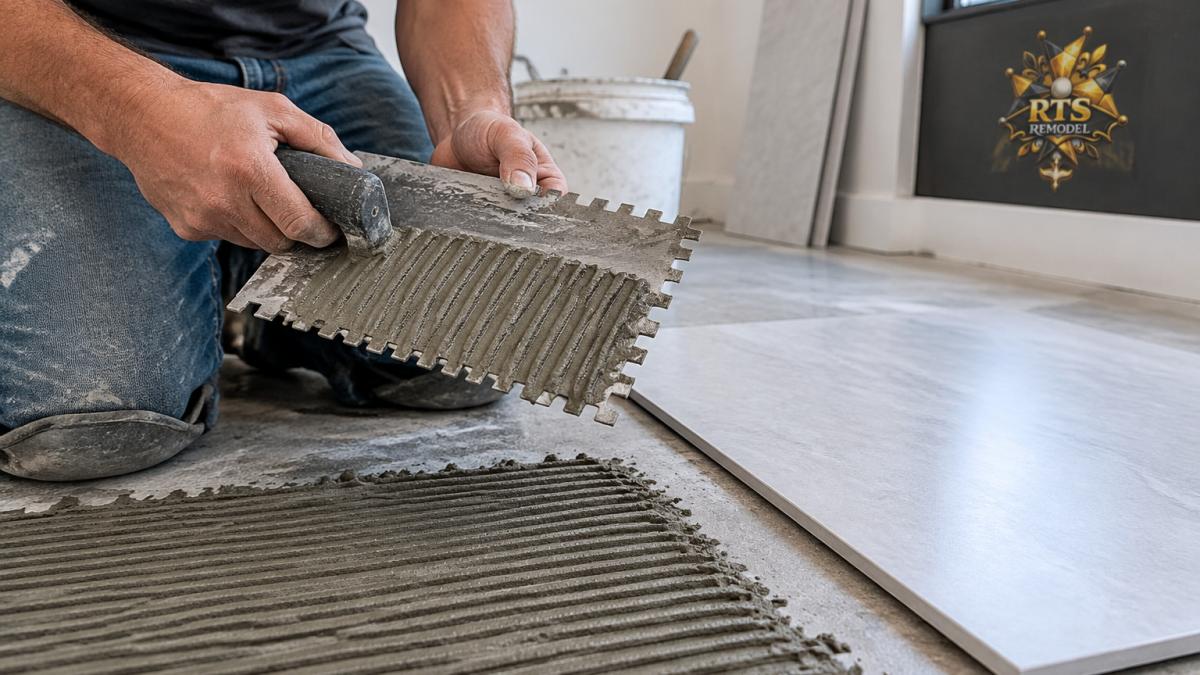
A notch that is too small leaves voids under the tile, and those voids can crack or loosen over time. Proper substrate prep steps that last help make sure the mortar bonds as intended.
How to Check Tile Mortar Coverage and Square Notch vs. V-Notch Trowel Choices
Square notches hold more mortar and suit most floor and large-format work; V-notches are better for thinner, lighter wall tile. To check coverage, lift one tile after setting it and look for mortar contact across the back. If coverage is thin, switch to a larger notch or back-butter the tile.
Every bathroom and kitchen project is different, and a flat, well-prepared surface makes all of this easier. If you are planning a tile project in Boise, Meridian, Eagle, Star or Kuna, contact RTS Remodel for an estimate. We handle complete bathroom and kitchen remodels, custom showers, and tile and stone installation across the Treasure Valley.
Frequently Asked Questions
How do I know what size notch trowel to use?
Start with the size of the tile. Smaller tiles, such as mosaics and 4-inch squares, usually work with a small notch, while larger tiles need deeper notches to hold enough mortar. Check the tile manufacturer's installation instructions for a recommended notch, then confirm by checking coverage on the back of a test tile. If the back of the tile is not fully covered after you press it into the mortar, move to a larger notch. Pressure and the flatness of the substrate also affect the final result, so the size on paper is a starting point rather than a final answer.
How do I check whether tile mortar coverage is adequate?
Set one tile, press it firmly, then lift it straight up after a few minutes. Look at the back of the tile and the mortar on the floor or wall. You want mortar contact across the full back, with ridges that collapse when pressed. Gaps, bare patches, or mortar that only sits in ridges mean the notch is too small, the mortar is setting too fast, or the substrate is not flat enough. Adjust the notch size or the troweling angle and test again before setting the rest of the tile.
Should I use a different trowel for large-format tile?
Usually yes. Large-format tile, such as 12x24 pieces, is more likely to warp or cup, so it needs a deeper notch and careful back-buttering to achieve full support. Mosaics and small tile generally use a smaller square or V-notch. Because tile thickness, back pattern, and substrate flatness all vary, RTS Remodel recommends confirming your choice with a coverage test before you commit to a full installation. Contact us for an estimate if you want help planning your project.