 blog
Liquid vs Sheet Membrane Waterproofing
Last Updated: October 23, 2026
Quick Summary
Liquid vs sheet membrane waterproofing differ in application method and installation timeline: liquid membranes are fluid-applied coatings that cure seamless but require 24 to 48 hours before tiling, while sheet membranes use pre-fabricated rolls that can often be tiled immediately. The right choice depends on your substrate condition, layout complexity, and weather during installation.
- Liquid membranes require skill to achieve uniform thickness; thin spots on corners and transitions are where leaks start.
- Sheet membranes offer fixed gauge thickness but depend on properly overlapped and sealed seams to prevent water intrusion.
- Liquid membranes need moderate temperature and low humidity to cure properly; sheet systems tolerate weather better during install.
- Both systems demand clean, smooth, stable substrate preparation before installation begins.
- Sealing and waterproofing choices should be made early in your bathroom remodel, before substrate prep starts.
Table of Contents
- Liquid vs Sheet Membrane Waterproofing: Key Differences
- Liquid Membrane Waterproofing Disadvantages
- Waterproofing Membrane Thickness and Coverage
- Frequently Asked Questions
Liquid vs Sheet Membrane Waterproofing: Key Differences
Choosing between liquid vs sheet membrane waterproofing is one of the most important decisions in any shower installation. Both work, but differ in application, performance, and substrate prep.
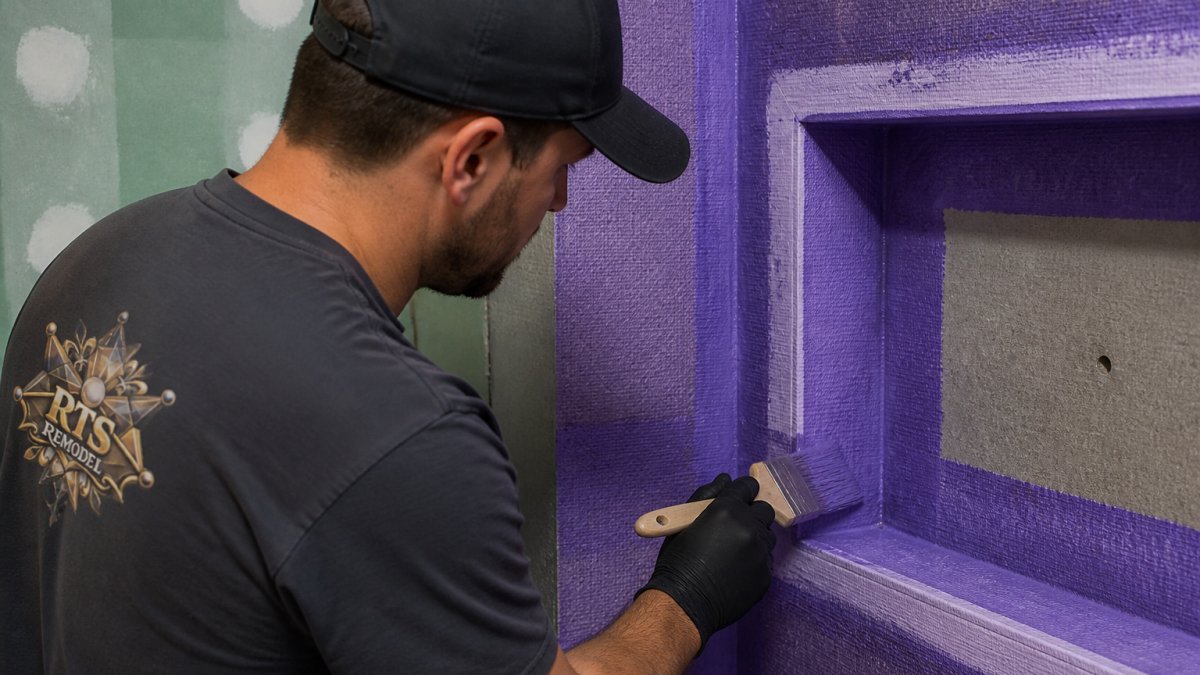
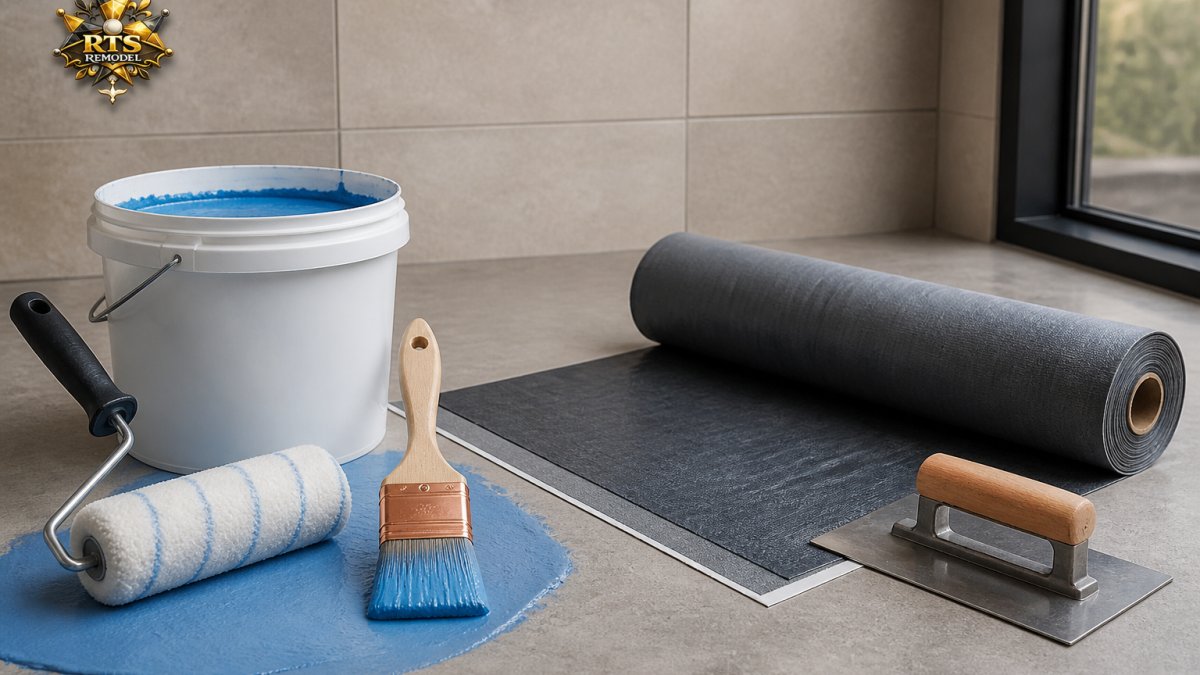
Liquid membrane waterproofing is a fluid-applied coating that cures into a seamless layer. Sheet membrane waterproofing uses pre-fabricated rolls adhered to the surface, with seams overlapped and sealed.
At RTS Remodel, we've installed both systems across the Treasure Valley. The right choice depends on substrate, layout complexity, and installer precision.
Liquid and sheet membranes differ significantly in how they're applied, how quickly they're ready for tile, and what conditions they tolerate during installation.
| Aspect | Liquid Membrane | Sheet Membrane |
|---|---|---|
| Application | Fluid-applied coating that cures seamless | Pre-fabricated rolls adhered with overlapped seams |
| Cure time before tiling | 24 to 48 hours | Often immediate |
| Thickness consistency | Requires skill to achieve uniform coverage | Fixed gauge, predictable thickness |
| Critical weak points | Thin spots on corners and transitions | Seams if not overlapped and sealed correctly |
| Ideal conditions | Moderate temperature and low humidity | Less sensitive to weather during install |
| Substrate sensitivity | Requires careful primer selection and prep | Requires clean, smooth, stable substrate |
Liquid Membrane Waterproofing Disadvantages
Liquid membranes offer seamless coverage, but a rushed installation is one of the fastest ways to create a future leak.
The biggest challenge is thickness consistency: too thin means incomplete protection, too thick wastes material and extends cure time. Uniform coverage on corners, niches, and transitions requires skill.
Curing time is another constraint: most liquid membranes need 24 to 48 hours before tile, longer in humid or cool conditions. Sheet systems can often be tiled immediately.
Liquid membranes perform best in moderate temperatures and low humidity; rain, cold, or excessive heat can compromise adhesion.
Finally, liquid membranes require careful primer selection and substrate prep. If the substrate isn't cleaned, primed, and dried, the membrane won't bond correctly.
Waterproofing Membrane Thickness and Coverage
Membrane thickness and uniform coverage are where waterproofing systems succeed or fail.
Liquid membranes must achieve consistent dry film thickness across the surface. Uniform coverage on curved walls, corners, and penetrations requires multiple coats and careful technique, thin spots are where water gets through.
Sheet membranes offer predictable thickness because the material has a fixed gauge. The trade-off is that seams become critical weak points if not overlapped and sealed correctly.
Both systems require proper substrate preparation, clean, smooth, and stable. Cracks, voids, or loose material will eventually cause failure, and large-format tile or complex geometry demands extra attention because movement below the membrane stresses the waterproofing layer.
Natural stone is porous and may require different primer or adhesion strategies depending on whether you're using liquid or sheet waterproofing, knowing which system suits your materials is where experience matters. When you're planning a Custom Showers & Tile installation or a complete bathroom transformation, the waterproofing choice should be made early, before substrate prep begins.
For sealing natural stone after waterproofing, learn about the best natural stone sealers for bathroom showers. For existing failures, explore how to fix leaking shower membrane effectively.
The waterproofing system you choose affects tile selection, timeline, and long-term durability. Both work when installed correctly by someone who understands substrate preparation, adhesion, and the details that prevent water intrusion.
Contact RTS Remodel for an estimate on your bathroom remodel. We'll assess your shower layout, substrate conditions, and design goals to recommend the right waterproofing system and install it with precision.
Frequently Asked Questions
What are the main downsides of using liquid membrane waterproofing?
Liquid membranes require precise application technique, uneven thickness, missed spots, or poor substrate prep can compromise performance. They're sensitive to weather during curing; rain or cold temperatures can affect adhesion and film formation. Application takes longer than sheet membranes, and quality depends heavily on installer skill. Once cured, you can't visually confirm uniform coverage the way you can inspect seams on sheet membranes.
How do you know when a liquid waterproofing membrane is thick enough?
Manufacturers specify the required wet film thickness, typically measured in millimeters. A wet gauge or mil gauge confirms thickness during application. Once cured, the membrane shrinks slightly, the dry film thickness will be thinner than the wet measurement. Proper substrate preparation, primer application, and following the manufacturer's coverage rate (square feet per gallon) ensure you achieve the specified thickness. Uneven application or rushing the job risks thin spots that fail under hydrostatic pressure.
Can you combine liquid and sheet waterproofing membranes in one shower?
Yes, many professional installations use both. Liquid membranes create a seamless base layer, while sheet membranes reinforce high-stress areas like corners, niche penetrations, and drain surrounds. This hybrid approach provides redundancy, if one membrane fails, the other offers protection. Compatibility matters: ensure both products are designed to work together and follow the manufacturer's specifications for adhesion and overlap. This layered approach is standard in high-performance shower installations.