 listicle
8 Kitchen Backsplash Tile Patterns Explained
Table of Contents
- The 8 Most Popular Kitchen Backsplash Tile Patterns Explained
- Kitchen Backsplash Layout Ideas by Tile Size and Installation
- Backsplash Tile Installation Considerations
- Frequently Asked Questions
Last Updated: October 10, 2026
The 8 Most Popular Kitchen Backsplash Tile Patterns Explained
Your kitchen backsplash is one of the most visible surfaces in your home, and the right tile pattern affects both aesthetics and durability.
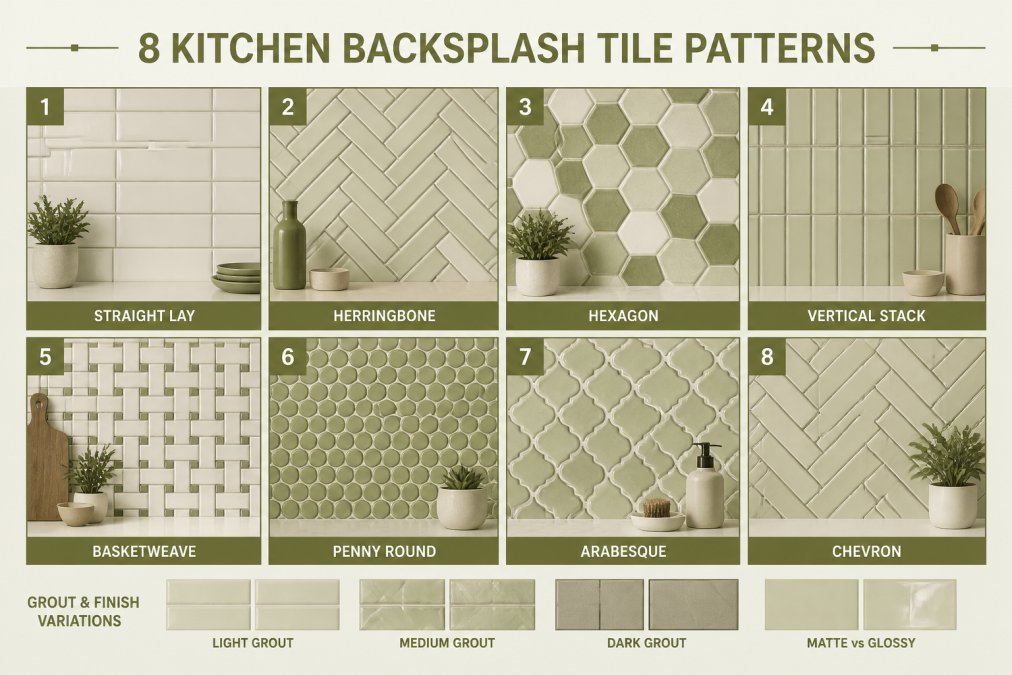
1. Straight Lay (Grid Pattern)
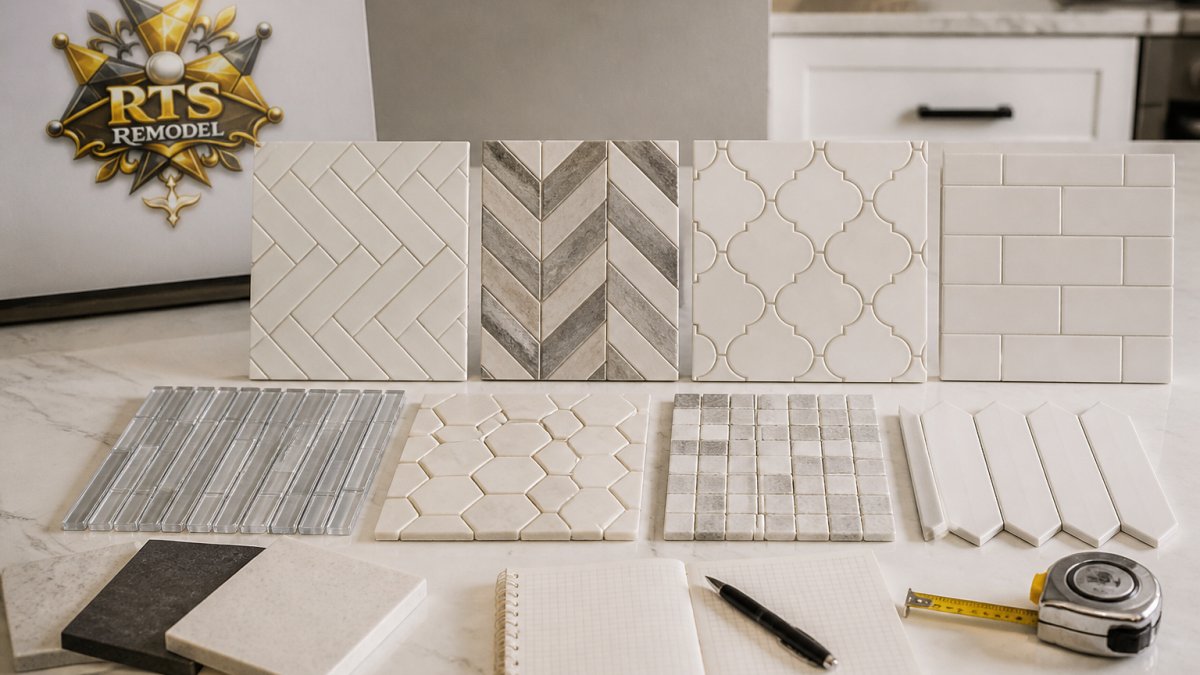
Straight lay stacks tiles in a uniform grid with no diagonal cuts required. Grout color matters: contrasting grout emphasizes the grid, while matching grout creates a seamless look.
2. Subway Tile Offset (Brick Pattern)
The brick pattern offsets each row by half, creating a forgiving, timeless staggered appearance with only simple half-tile cuts at row ends.
3. Herringbone Pattern
Herringbone lays rectangular tiles at 45-degree angles in alternating directions, creating strong visual movement. It demands precision: every tile must be cut at 45 degrees and lippage becomes immediately visible, with more waste.
4. Chevron Pattern
Chevron creates a continuous zigzag with all tiles pointing the same direction, requiring 45-degree cuts and careful alignment for consistency in tile color.
5. Hexagon Pattern
Hexagonal tiles create a honeycomb effect with moderate installation difficulty and flexibility in layout.
6. Diamond Pattern
Diamond patterns rotate square tiles 45 degrees to sit point-up, creating elegant visual movement best as accent sections.
7. Mosaic Mix
Mosaic mixing combines multiple tile shapes, sizes, and colors for artistic expression, requiring careful planning to feel intentional.
8. Large-Format Tile
Large-format tiles create a contemporary look with minimal grout lines but demand a perfectly flat substrate and meticulous installation for even lippage.
Kitchen Backsplash Layout Ideas by Tile Size and Installation
Smaller tiles forgive substrate irregularities; larger tiles feel contemporary but demand precision in herringbone and chevron patterns.
Backsplash Tile Installation Considerations
The best pattern is only as good as the installation behind it. Substrate preparation must be flat, stable, and properly sealed; waterproofing prevents moisture damage. Grout selection affects durability: unsanded for lines under 1/8 inch, sanded for larger lines, epoxy for maximum durability (Grout). Lippage control is critical with large-format, herringbone, and chevron patterns.
The most important decision is choosing a contractor who understands substrate preparation, waterproofing, and finish quality. A beautiful pattern installed over poor substrate will fail; a simpler pattern with meticulous attention to hidden details will outlast and outperform.
If you're planning a kitchen remodel in the Treasure Valley, RTS Remodel specializes in Kitchen Backsplashes and Tile & Stone Installation as part of complete kitchen transformations, combining aesthetic vision with structural integrity. We handle substrate prep, waterproofing, and final sealing. Contact RTS Remodel for an estimate and let's discuss which kitchen backsplash tile patterns will work best for your space.
Frequently Asked Questions
What is the most popular kitchen backsplash tile pattern?
Subway tile in a straight-lay or half-offset brick pattern remains the most popular choice. Its clean lines, affordability, and versatility work with nearly any kitchen style. Herringbone and chevron patterns rank second as homeowners seek more visual movement and geometric interest. The pattern you choose depends on your kitchen's scale, existing cabinetry, and whether you prefer a classic or contemporary look.
Does herringbone backsplash work well in a small kitchen?
Herringbone can work in small kitchens, but the diagonal orientation creates visual movement that can make tight spaces feel busier. Smaller tile sizes (like 2x4 subway) in a herringbone layout minimize this effect. For truly compact kitchens, a straight-lay or brick-pattern subway tile with a tonal grout color creates a cleaner, more spacious feel. Larger format tiles with minimal grout lines also help small kitchens appear less fragmented.
What's the difference between a tile pattern and a tile layout?
A tile pattern describes the visual design created by how tiles are arranged, herringbone, chevron, hexagon, or mosaic. A tile layout refers to how those tiles are oriented and offset relative to each other during installation. For example, subway tile is the shape; the layout could be straight-lay, half-offset brick, or running bond. Understanding both helps you communicate clearly with your installer about the exact look you want.
Which backsplash patterns require the most skilled installation?
Herringbone, chevron, and diagonal patterns demand the highest precision. Each tile must be cut at exact angles and seated perfectly to avoid lippage (uneven grout lines). Large-format tiles also require careful substrate preparation and waterproofing since fewer grout lines mean less room for error. Straight-lay and brick-pattern layouts are more forgiving, though professional installation ensures consistent substrate prep, waterproofing, and long-term durability.