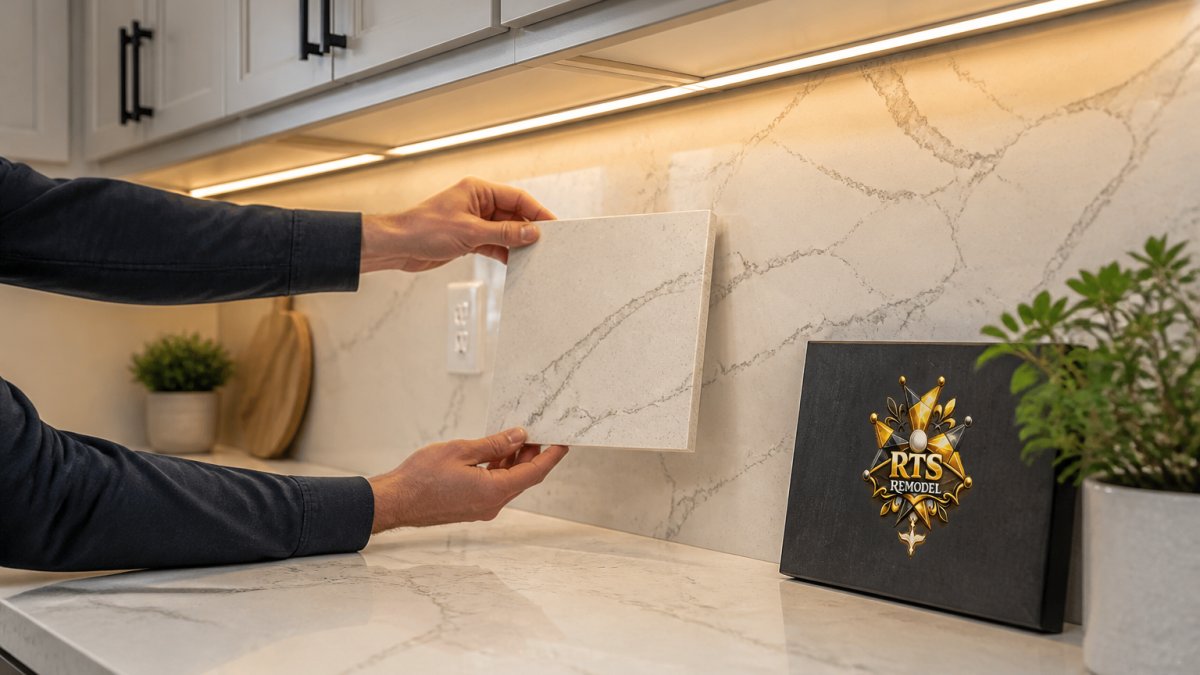
 comparison
Is Quartz Backsplash Worth the Price?
Table of Contents
- What Makes Quartz Backsplashes Different
- Quartz Backsplash Pros and Cons
- Quartz Backsplash vs. Tile: Which Offers Better Value
- Frequently Asked Questions
Last Updated: October 6, 2026
What Makes Quartz Backsplashes Different
A quartz backsplash is engineered stone, crushed quartz mixed with resin binders, made to protect the wall behind your stove and countertop. Unlike natural stone or tile, it's non-porous and seamless, eliminating grout lines and their upkeep.
The appeal is a continuous, polished surface with minimal upkeep, but is quartz backsplash worth the price?
What sets quartz apart is consistency: every slab looks identical, with none of granite or marble's natural variation. Its non-porous surface wipes clean far easier than grout-based tile. The trade-off is heat sensitivity: quartz's resin binders can scorch under sustained stovetop heat, something tile and natural stone don't face.
Quartz Backsplash Pros and Cons
What works in quartz's favor:
Non-porous construction means no grout lines to harbor mold or stains, you wipe it down and you're done. Seamless installation creates a sleek, modern look, eliminating grout joints and the lippage that can occur even with professional tile work. Quartz resists scratching and staining better than most countertop materials, and design consistency means you get exactly what you see in the showroom.
The honest limitations:
Heat resistance is the biggest one. A hot pot against an unshielded quartz backsplash risks scorch marks, so you'll need a heat shield or protective trim if you cook with high heat near the wall.
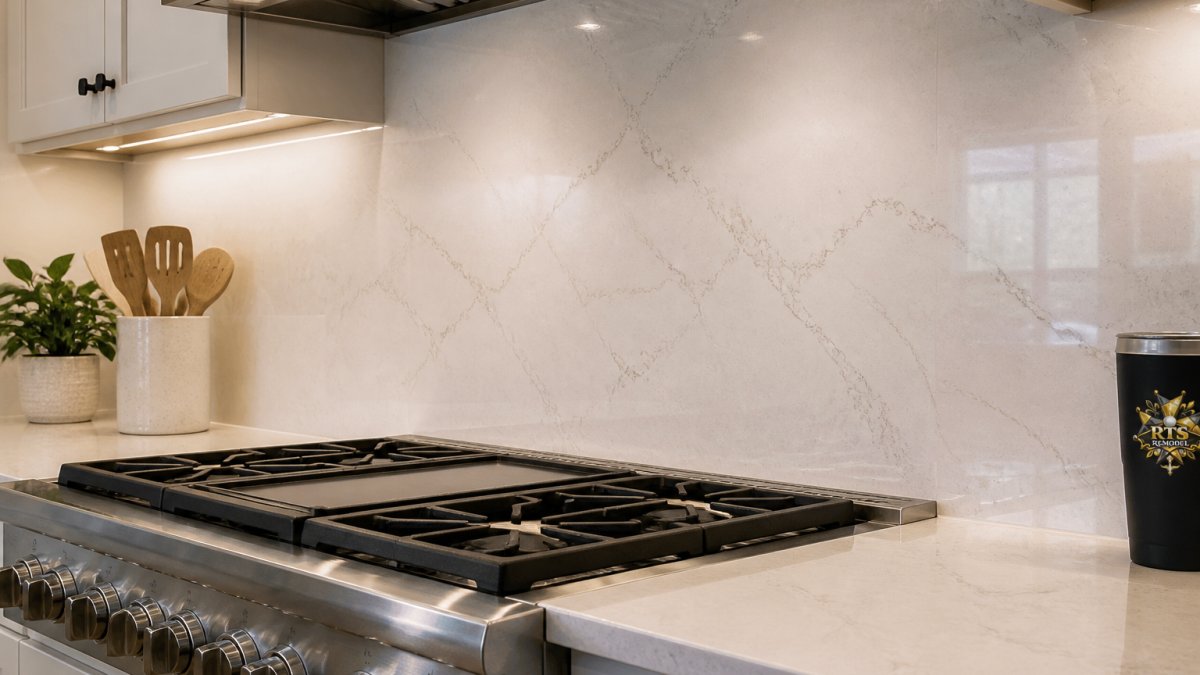
Seams are visible on larger installations. If your backsplash spans more than 5 feet, you'll likely see a seam where two slabs meet, fabrication quality and installation precision matter here. UV exposure can cause fading over time, especially in kitchens with direct sunlight. Cost is higher upfront than basic tile, though not always more than high-end natural stone.
Quartz Backsplash vs. Tile: Which Offers Better Value
Ceramic or porcelain tile costs less per square foot and offers unlimited design flexibility, mixed colors, sizes, and finishes. The downside: grout needs maintenance, and lippage can happen even with professional installation if the substrate isn't perfectly flat. Natural stone, granite, marble, slate, sits between tile and quartz in price, but requires sealing and can stain.
Quartz offers consistency, minimal maintenance, and a seamless look, you're paying for engineered reliability and precise slab fabrication. For design flexibility or lower upfront cost, tile makes more sense.
The real value isn't just material cost, it's the substrate work underneath. A beautiful backsplash fails if the wall isn't properly prepared, waterproofed, and leveled, and that hidden work determines how long it lasts regardless of material. Whether you choose Granite & Quartz Countertops or Kitchen Backsplashes in tile or stone, the installation foundation is what separates a backsplash that lasts decades from one that fails.
For Treasure Valley homeowners planning a kitchen remodel, weigh your cooking style, layout, and maintenance preferences. Determining whether is quartz backsplash worth the price depends on your values: choose it for seamless aesthetics and easy cleaning, or tile for design options and lower initial cost. Either fails without proper installation, substrate prep, waterproofing, and precision matter more than the material.
If you're planning a kitchen renovation and want to know which backsplash material makes sense for your home, we can walk you through the options during an estimate. At RTS Remodel, we know how substrate prep, sealing, and finish quality determine whether your backsplash looks great for decades. Get in touch to discuss your project.
Frequently Asked Questions
Is a quartz backsplash cheaper than a tile backsplash?
No. Quartz slabs typically cost more upfront than traditional tile because they're engineered stone sold as single pieces rather than individual tiles. Tile offers more budget flexibility since you can mix materials or choose less expensive options. However, quartz requires fewer grout lines and less ongoing maintenance, which can offset costs over time. The total investment depends on your kitchen size, slab thickness, and whether you're doing a standard or full-height backsplash.
What are the main downsides of a quartz backsplash?
Quartz is heat-sensitive and can scorch or discolor near stovetops without a heat shield, limiting placement flexibility. Seams are visible on large installations and require careful planning for aesthetic integration. The non-porous surface resists staining well, but fabrication mistakes or poor installation can be costly to repair. Quartz also doesn't offer the design variety of tile, and some homeowners find the engineered look less distinctive than natural stone or custom tilework.
Does a quartz backsplash need grout?
No. Quartz backsplashes are typically installed as solid slabs with minimal or no grout lines, which is one of their main advantages. This reduces maintenance and eliminates grout cracking, a common problem in tiled backsplashes. However, seams where slabs meet still require professional fabrication and installation to ensure they're tight and properly finished for a seamless appearance.
Is a full-height quartz backsplash worth it?
A full-height quartz backsplash creates a dramatic, continuous look and maximizes the non-porous, stain-resistant benefits of the material. However, the increased material and labor costs are substantial, and you'll have more visible seams, which affects the aesthetic. For most kitchens, a standard backsplash above the counter to the cabinets provides the durability and design impact at a better value. A full-height install makes sense if you prioritize a seamless, high-end appearance and have the budget for it.