 How-to
7 Large Format Backsplash Details That Make a Kitchen
Last Updated: October 30, 2026
Quick Summary
Large format backsplash tile is roughly 12 x 24 inches or bigger, and fewer grout lines mean fewer places for grease and flour to collect. Large tile needs a flat, properly prepped substrate because it refuses to hide a wavy wall.
- Horizontal stacked layouts read calm and modern and are the safest bet for a busy kitchen.
- Standard backsplash height runs from the counter to the bottom of the upper cabinets, typically 18 to 20 inches.
- Wall prep must be flat over cement backer board or a skim coat, with modified thinset rated for the panel weight.
- Back-buttering is not optional; skipping it on a 24 x 48 panel leaves voids that lead to cracks and popped tiles.
- Leveling clips and a flat substrate prevent lippage, the number one complaint on large-format work.
Table of Contents
- Why Large Format Tile Works on a Kitchen Backsplash
- Large Tile Kitchen Backsplash Ideas That Hold Up
- Kitchen Backsplash Tile Layout and Height Decisions
- Why Large Format Tile Works on a Kitchen Backsplash
- Large Format Backsplash Installation, Step by Step
- Cost, Weight, and When to Hire a Pro
- Frequently Asked Questions
Why Large Format Tile Works on a Kitchen Backsplash
Large format tile for a kitchen backsplash is roughly 12 x 24 inches or bigger, and fewer grout lines mean fewer places for grease and flour to collect. Large tile needs a flat, properly prepped substrate because it refuses to hide a wavy wall. For the full breakdown, see our guide to preventing lippage in large tile.
Large Tile Kitchen Backsplash Ideas That Hold Up
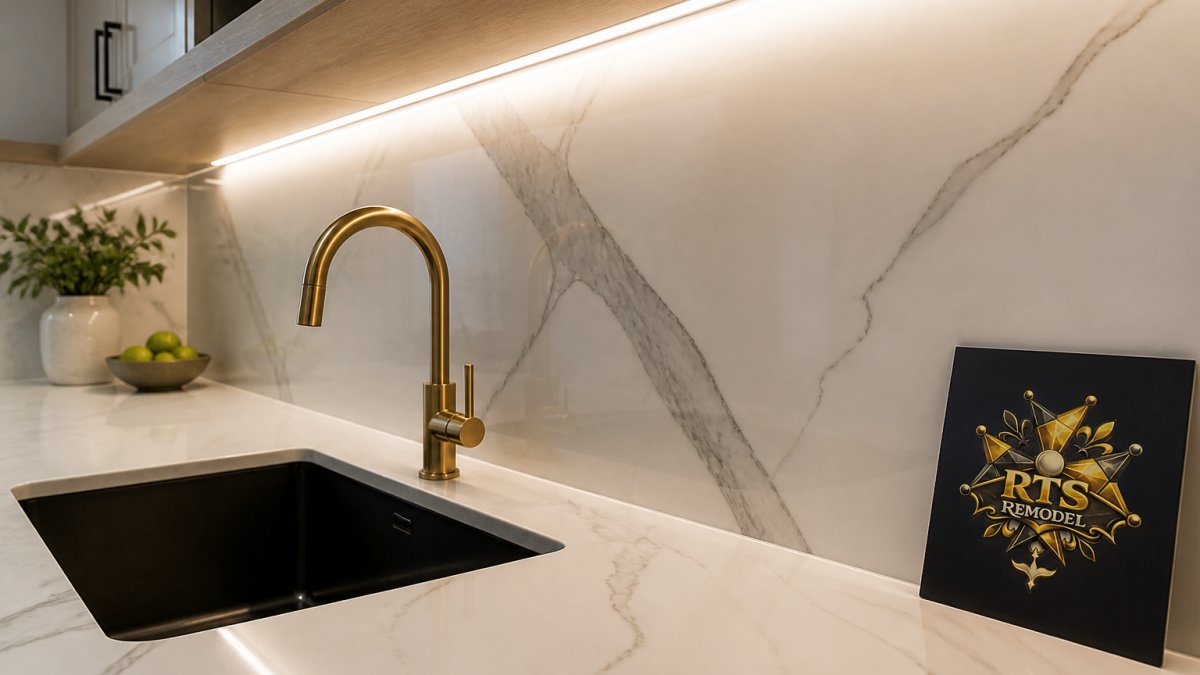
Horizontal stacked layouts read calm and modern and are the safest bet for a busy kitchen. Bookmatched stone-look porcelain gives a slab appearance without slab weight, and running large-format tile vertically stretches a short wall between counter and cabinets. If you are leaning toward a marble look, learn how to clean a marble kitchen backsplash safely.
For layout options, see 8 kitchen backsplash tile patterns explained.
Kitchen Backsplash Tile Layout and Height Decisions
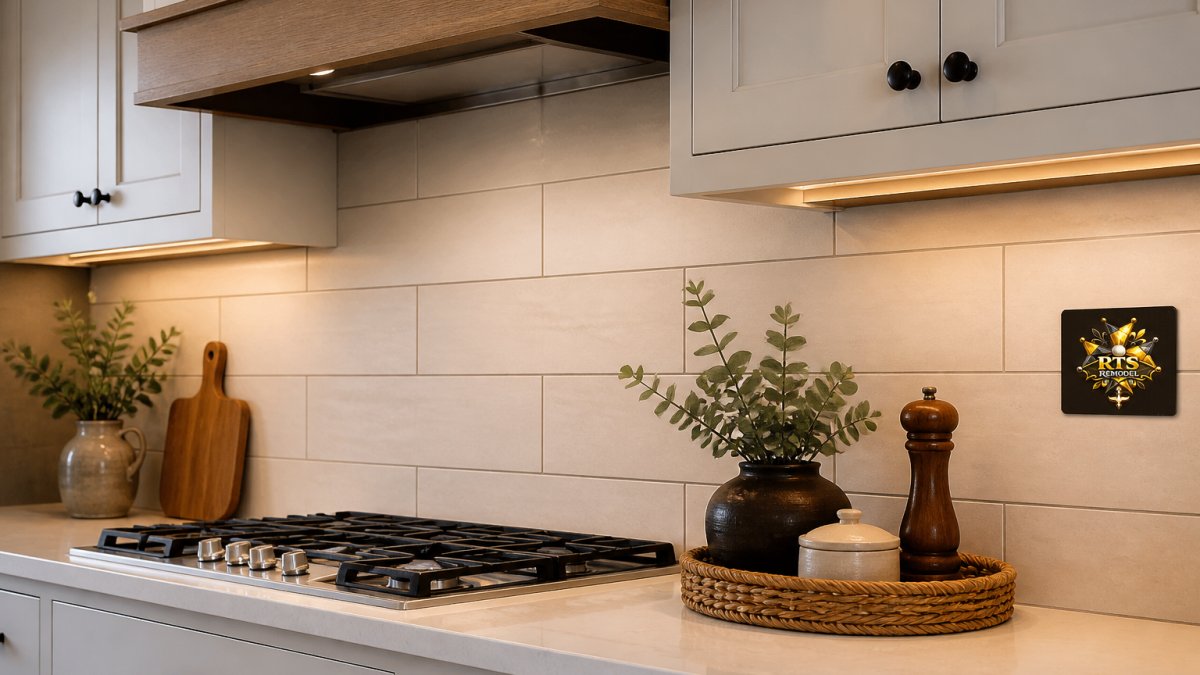
Standard kitchen backsplash height runs from the counter to the bottom of the upper cabinets, typically 18 to 20 inches. Center a full tile on the range, keep cut edges in corners, and plan outlet locations before the first panel goes up. Our Kitchen Backsplashes service covers the tile work as part of a complete kitchen transformation.
Why Large Format Tile Works on a Kitchen Backsplash
The case for large format backsplash panels comes down to fewer seams, faster cleaning, and a more continuous look. Two things decide whether the install lasts: wall prep flat to a tight tolerance over cement backer board or a skim coat, and a modified thinset rated for the panel weight. Back-buttering is not optional, skipping it on a 24 x 48 panel leaves voids that lead to cracks and popped tiles within a season.
Large Format Backsplash Installation, Step by Step
Lippage, the height difference between adjacent tile edges, is the number one complaint on large-format work. Leveling clips and a flat substrate prevent it.
Cost, Weight, and When to Hire a Pro
Large format costs more per square foot than mosaic, but you buy less grout and fewer labor hours on layout. A professional is worth considering when the wall is out of flat, the layout includes multiple outlets, or the tile is natural stone. If the project grows into a full kitchen update, our Complete Kitchen Remodeling service can coordinate the backsplash, countertops, and cabinetry.
| Decision | Large Format Tile | Full Slab |
|---|---|---|
| Grout lines | Few, thin | None |
| Weight | Moderate | Heavy |
| Best for | Most kitchens | High-end focal walls |
Frequently Asked Questions
Can large-format tile be used for a kitchen backsplash?
Yes. Large format backsplash tile works well in kitchens because fewer grout lines mean a cleaner, more continuous look behind the counter. The catch is the wall itself: large tiles follow every dip and bow in the drywall, so the wall has to be flat and sound before anything goes up. A tile pro will check for high spots, loose drywall and outlets that need to be reset before setting the first piece.
Does large-format backsplash tile need grout lines?
It needs joints, but they can be tight. Most large-format tile is installed with a narrow grout joint, often around 1/16 to 1/8 inch, which keeps the surface reading as one plane. The joint still has to be there for movement and for a proper fill. Skipping grout entirely or butting tiles tight against each other is a common mistake that leads to chipped edges and cracked tiles later.
How do you lay out large-format tile on a backsplash?
Start with the most visible sightline, usually the countertop, and work up from there. Center the layout on the range or the sink so cuts land in the corners instead of the middle of the wall. Plan outlet and cabinet cuts before setting tile, and decide whether the pattern runs horizontally or vertically. A dry layout on the floor first shows you exactly where the awkward cuts will fall.
A backsplash is one of the few surfaces you look at every single day, and a wavy wall or a lipped seam never stops bothering you. RTS Remodel brings substrate prep, waterproofing, precise layout, and finish work under one coordinated project, so the hidden work matches what you see. Get started with RTS Remodel and request an estimate for your kitchen backsplash.