 How-to
Why Do Heated Floors Need Specific Substrate Prep?
Last Updated: November 6, 2026
Quick Summary
A heated floor substrate must be flat, sound and free of dust or trapped moisture, because any flex or dip creates voids over the heating element that slow heat transfer and crack grout or loosen tile. An uncoupling membrane then lets tile and subfloor move independently as heat drives expansion.
- Check flatness with a long straightedge; even a few millimeters of dip creates a void over the heating element.
- An uncoupling membrane absorbs the expansion and contraction heat drives instead of passing it into tile and grout.
- Use a 1/2 in square notch for large-format tile and always back-butter it.
- Lift a test tile to verify mortar coverage before committing to the full installation.
Table of Contents
- Subfloor Requirements for Heated Tile Floors
- Uncoupling Membrane for Heated Floors: Why It Matters
- Tile Trowel Size for Heated Floor Tile
- Frequently Asked Questions
Subfloor Requirements for Heated Tile Floors
A heated tile floor is only as good as its heated floor substrate. A base that flexes or dips will crack grout and loosen tile no matter how carefully the top layers are set.
The core requirements: no bounce or soft spots, no dust or trapped moisture, flatness checked with a long straightedge, and a surface compatible with the assembly.
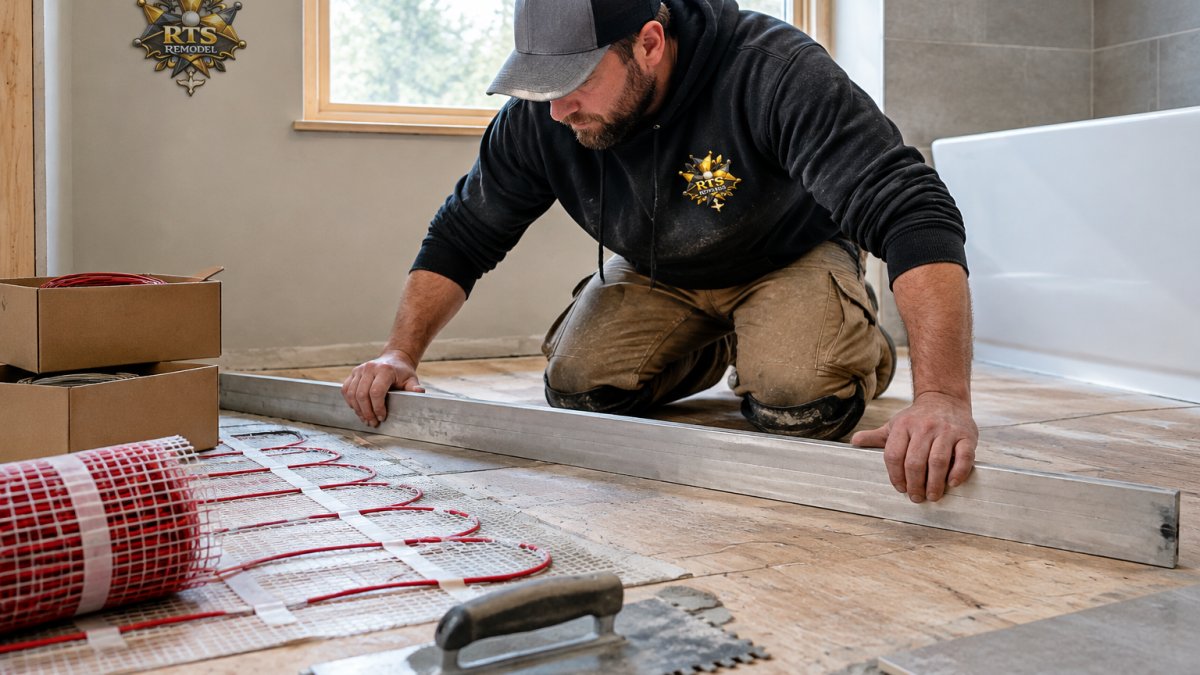
Flatness is the one homeowners underestimate most. A dip of a few millimeters under a tile means a void, and a void over a heating element traps air, slowing heat transfer and creating a stress point. See our guides on tile installation substrate prep steps that last and preparing uneven subfloors for large-format tile.
Uncoupling Membrane for Heated Floors: Why It Matters
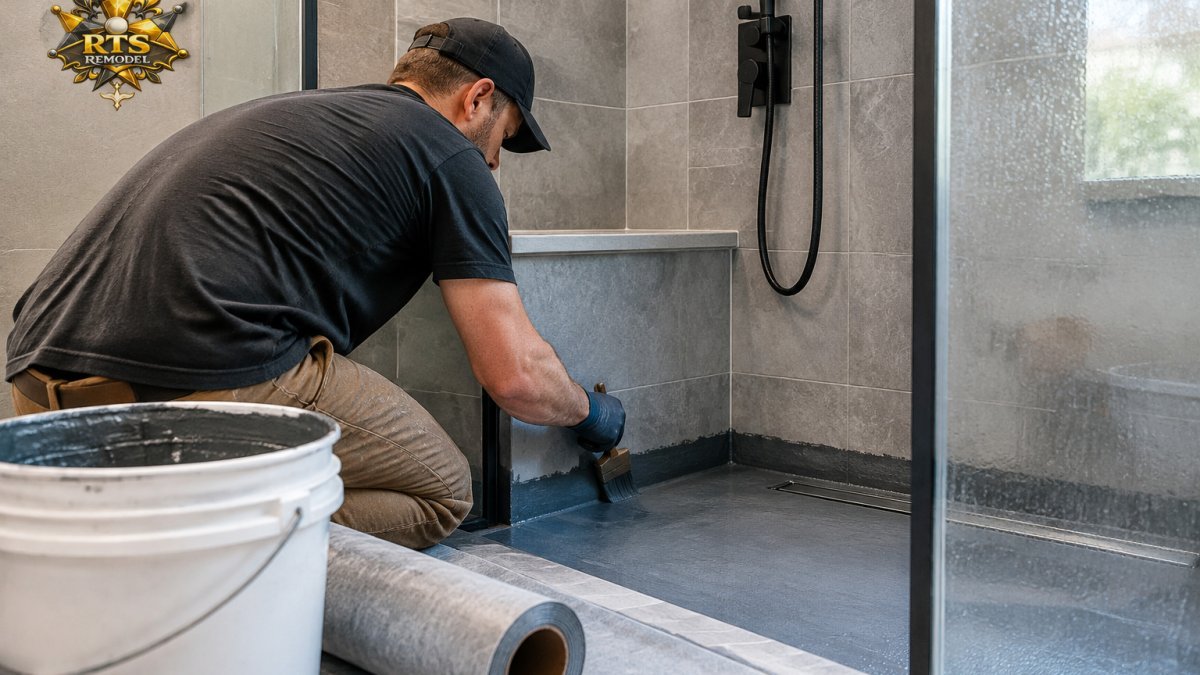
An uncoupling membrane separates tile from subfloor so the two move independently, absorbing the expansion and contraction heat drives instead of passing it into the tile and grout (Crack Isolation / Suppression / Anti-fracture Membrane). It also doubles as waterproofing in wet areas.
Our comparison of liquid vs sheet membrane waterproofing covers where each fits.
Tile Trowel Size for Heated Floor Tile
The right trowel size depends on tile size, thickness, and the back of the tile, there is no single notch that works for every heated floor.
| Tile Size | Typical Notch | Notes |
|---|---|---|
| Small mosaic (under 2 in) | 3/16 in V-notch | Small tiles need a thin, even bed |
| Medium (up to 12 in) | 1/4 in square notch | Common for standard floor tile |
| Large-format (12 in and up) | 1/2 in square notch | Pair with back-buttering |
Two rules matter more than the chart: always back-butter large-format tile, and check coverage by lifting a test tile before you commit. Trowel size ties directly to lippage, so read our guide on preventing lippage in large tile first.
Once prep and coverage are dialed in, the finish work is where a heated floor earns its keep. Our bathroom remodeling and custom shower work covers the details that make the assembly last. The same prep discipline carries into our tile and stone installation and slab showers, where a flat, sound substrate and full mortar coverage matter just as much.
A heated floor that lasts comes down to the layers you never see: a flat, sound subfloor, a proper uncoupling membrane, and full mortar coverage under every tile. We focus on the hidden work at RTS Remodel, from complete bathroom and kitchen remodels to custom showers across the Treasure Valley. Request an estimate for your heated tile floor.
Frequently Asked Questions
Why does a heated floor need a properly prepared substrate?
Heating cables create small high spots, so any dip or hump in the subfloor turns into a void under the tile. Voids lead to cracked grout, loose tiles and uneven heat. A flat, sound, clean substrate lets the mortar bed and thinset mortar hold full contact around the cables, which protects bond strength and keeps the finished floor level.
How flat should a floor be before installing tile over a heating system?
The industry standard most tile manufacturers reference is no more than 1/8 inch deviation in 10 feet, and 1/16 inch in 2 feet. Check with a 10-foot straightedge before any membrane or cable goes down. Grinding high spots and filling low spots with a patching compound is far cheaper than replacing a cracked tile floor later.
Does a heated floor need an uncoupling membrane?
It is not always required, but it is the safest choice over wood-framed floors and over any heated assembly. An uncoupling membrane for heated floors separates the tile from movement in the subfloor and gives the cables a stable bed. Follow the heating and membrane manufacturers' approved assemblies, and never staple or fasten through a membrane after the cables are set.